“Whispers from Stutthof” is a record of the feeling that accompanied me during many walks in the forest. Polish forests, apart from being monuments of nature, are also sites of many tragic events, including those from the time of World War II. The forest as a place of escape, shelter, and crime.
Nature, which could both hide and protect, has also concealed the memory of victims, gradually erasing all traces—vegetation, in its natural process, overgrows these places.
The Stutthof extermination camp is a particularly significant site. The forest surrounding the camp, after heavy rainfall, storms, and other sudden weather changes, brings to the surface “treasures” hidden in the ground: shoes, glasses, fragments of clothing. The entire area does not allow one to forget the crimes it has witnessed.
The phenomenon of objects emerging from the earth led me to think about the forest as a witness to many crimes—not only those that took place near concentration and extermination camps, but also as a place where crime can be easily concealed.
The work is made on small aluminium plates, onto which a graphic image created using a transfer technique has been applied. The image depicts a fragment of a forest. The plates are mounted on a 30 × 30 cm panel. They are fixed in one position, making them highly sensitive to air movement and constantly in motion. The entire piece forms a composition measuring 90 cm in height and 120 cm in width.
Szepty ze Stutthof jest zapisem uczucia towarzyszącego mi podczas wielu spacerów po lesie. Polskie lasy oprócz bycia pomnikiem przyrody, są miejscem wielu tragicznych wydarzeń, między innymi tych z czasów II wojny światowej. Las jako miejsce ucieczki, schronienie i miejsce zbrodni. Przyroda, która mogła ukryć i ocalić, ukrywała też pamięć o ofiarach, likwidując sukcesywnie wszystkie ślady – roślinność w swej naturalności zarastała te miejsca.
Obóz zagłady w Stutthof to miejsce szczególne. Las wokół obozu po większych opadach, burzach i innych gwałtownych zawirowaniach pogodowych, wyrzuca na powierzchnię ziemi ukryte w niej “skarby”: Buty, okulary, fragmenty ubrań. Cały teren nie pozwala zapomnieć o zbrodniach, których był świadkiem.
Sytuacja wychodzących z ziemi przedmiotów doprowadziła mnie do myślenia o lesie jako świadku wielu zbrodni, nie tylko tych, które miały miejsce obok obozów koncentracyjnych i obozów zagłady, ale także miejscu, w którym zbrodnię schować bardzo łatwo.
Praca jest wykonana na małych płytkach aluminiowych, na które nałożona jest grafika powstała metodą transferu. Grafika w całości przedstawia fragment lasu. Płytki są umieszczone na panelu 30x30cm. Są zamocowane w jednym miejscu, przez co są bardzo wrażliwe na ruch powietrza i cały czas się poruszają. Całość pracy tworzy grafikę w formacie 90 cm wysokości na 120 cm szerokości.
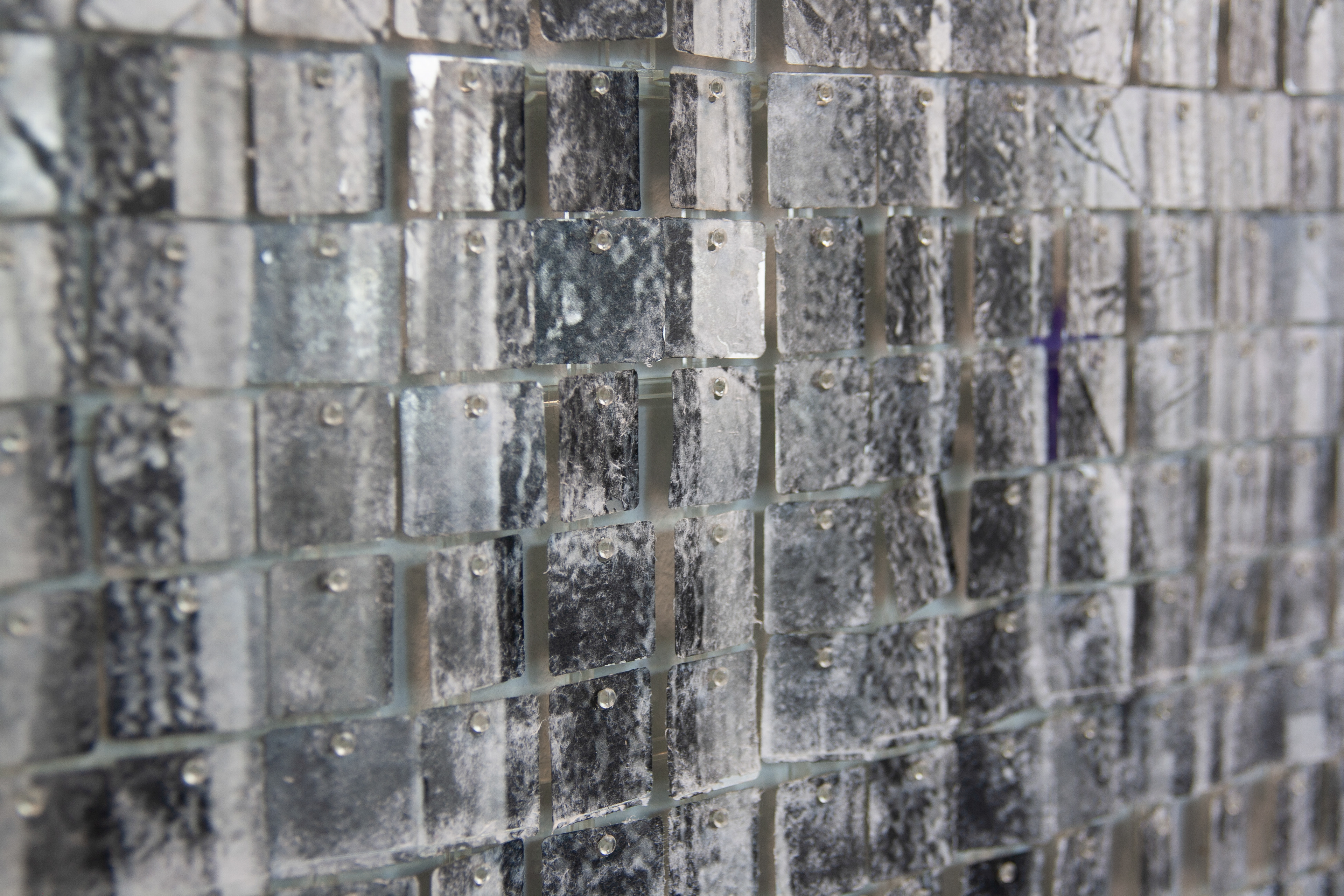
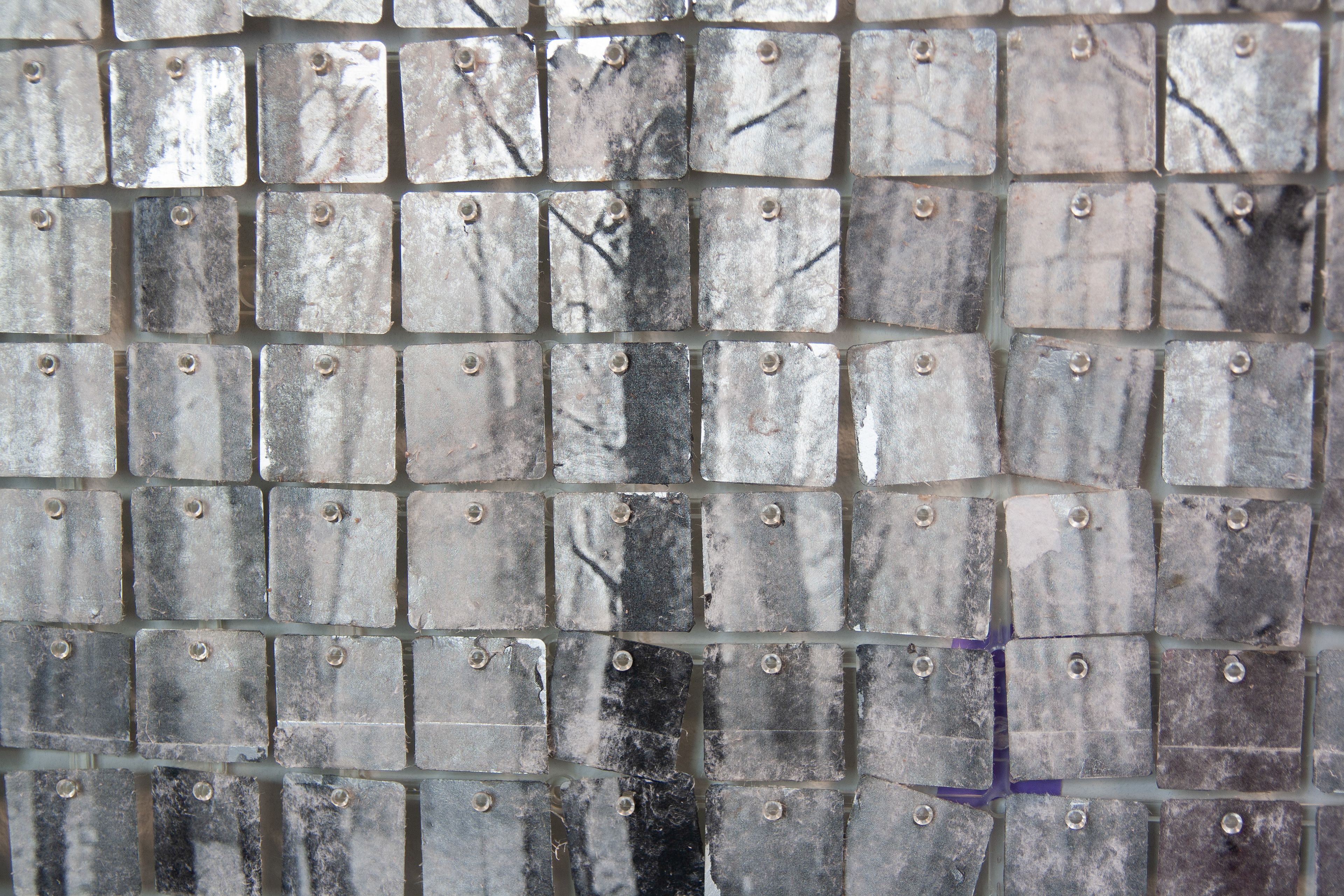
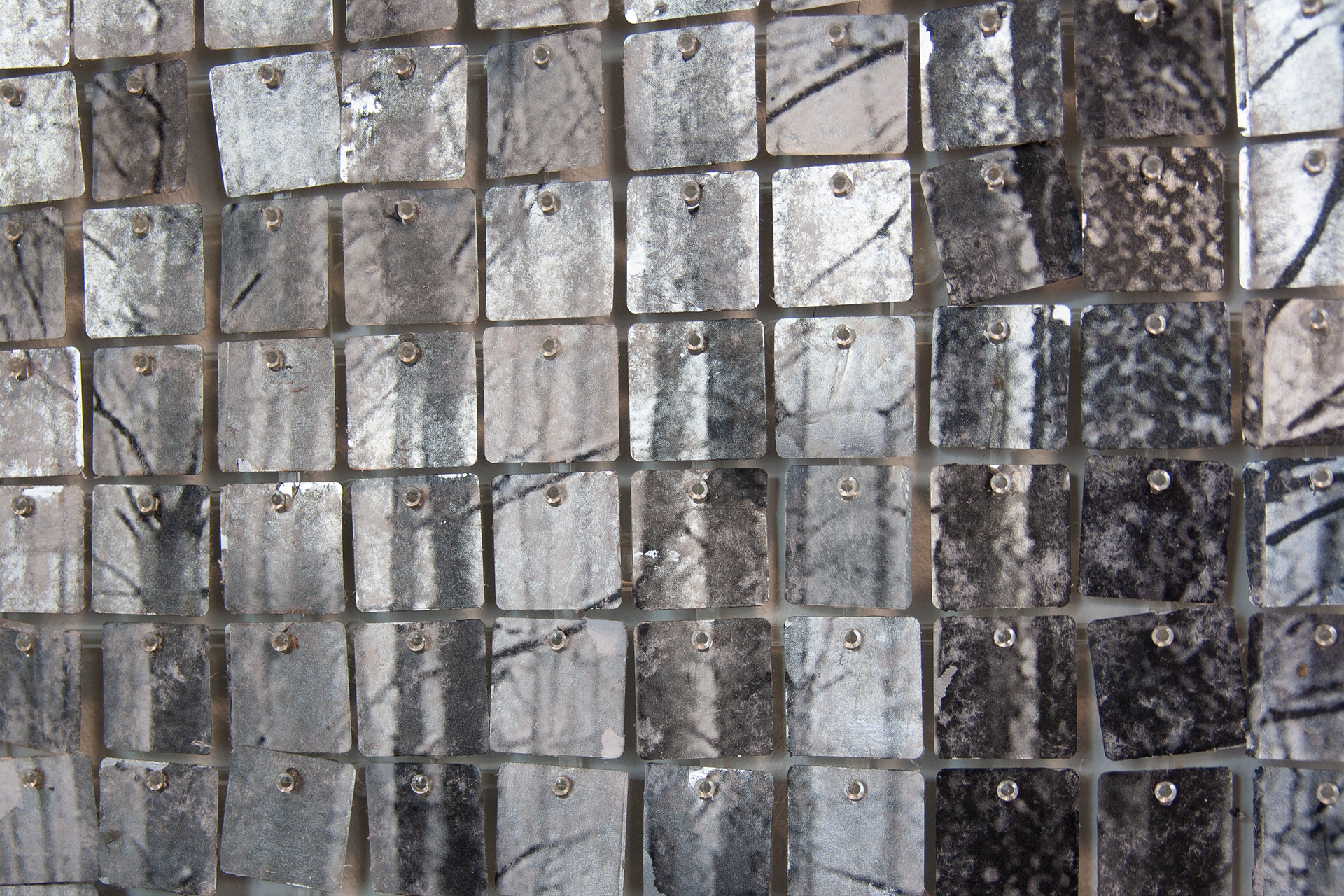
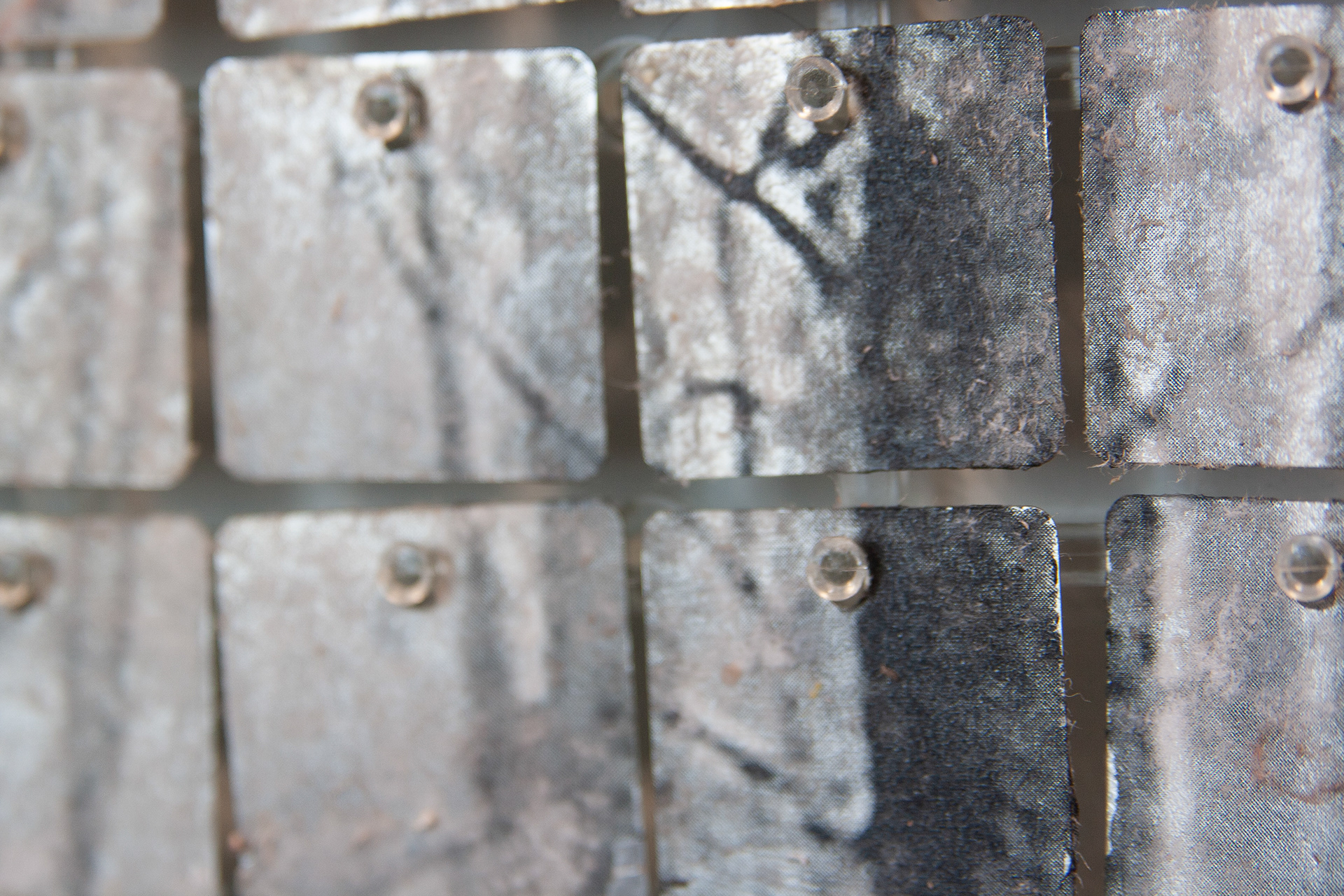
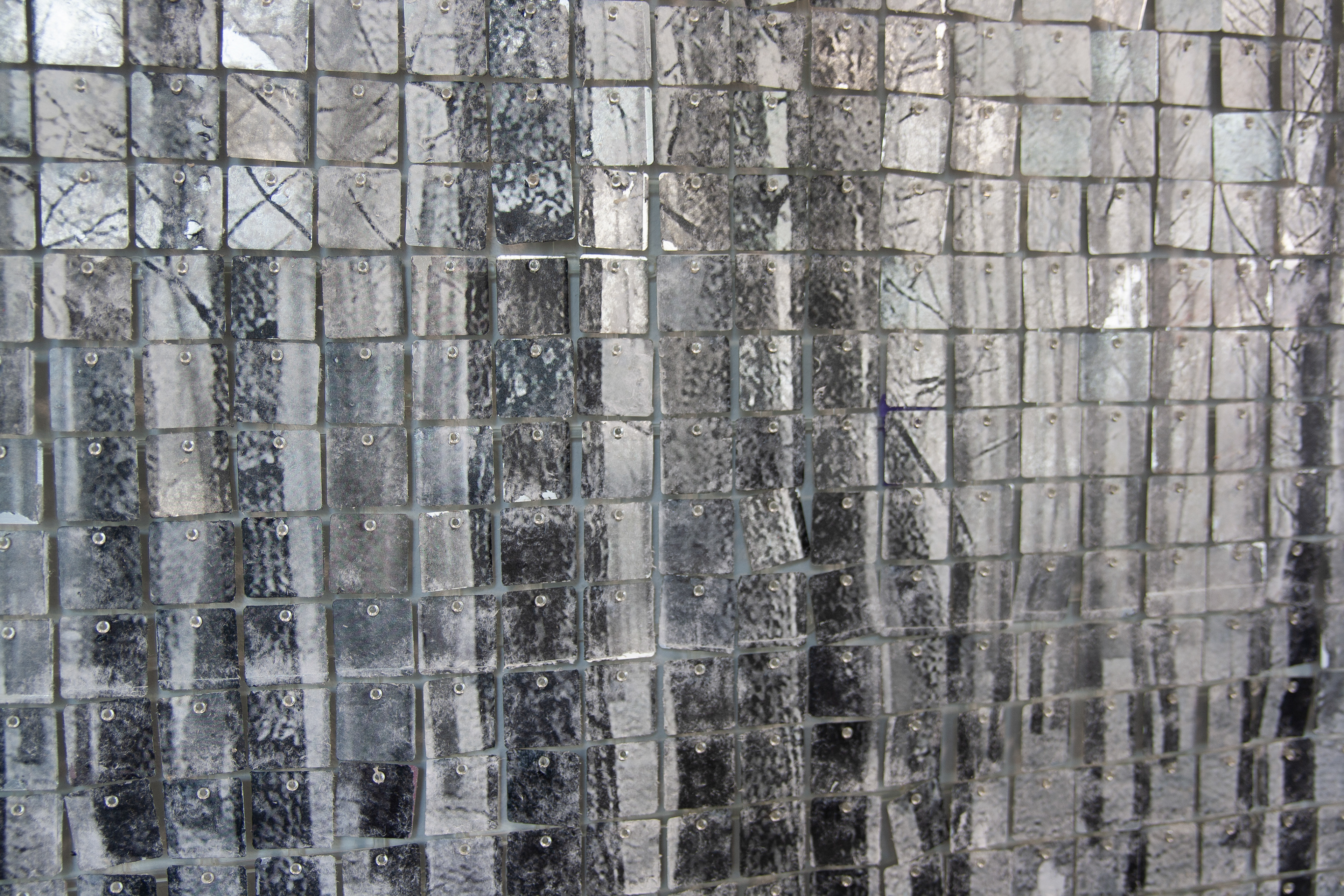
transfer on aluminium
transfer na aluminium
120x90 cm