Lunar Calendar
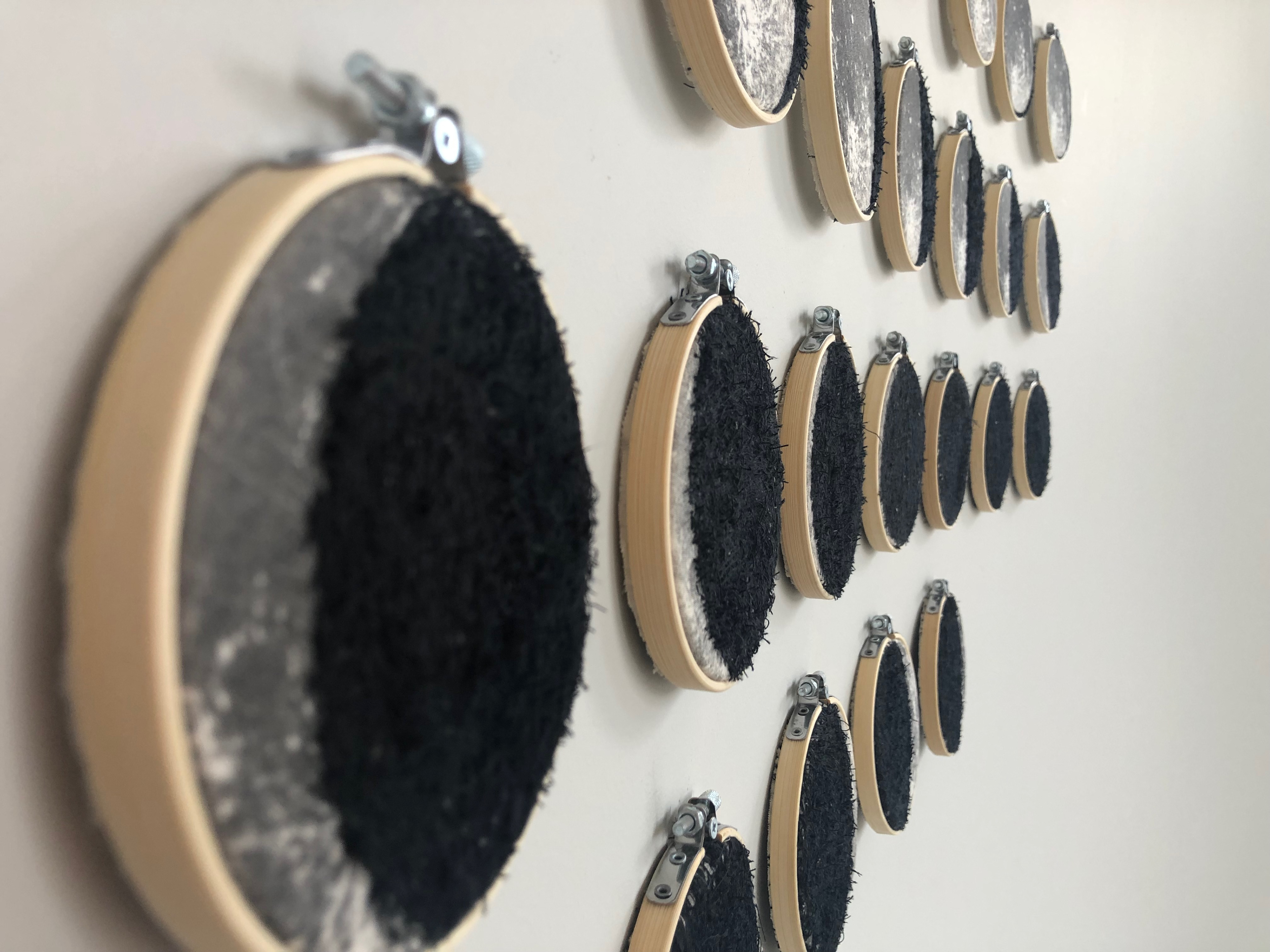
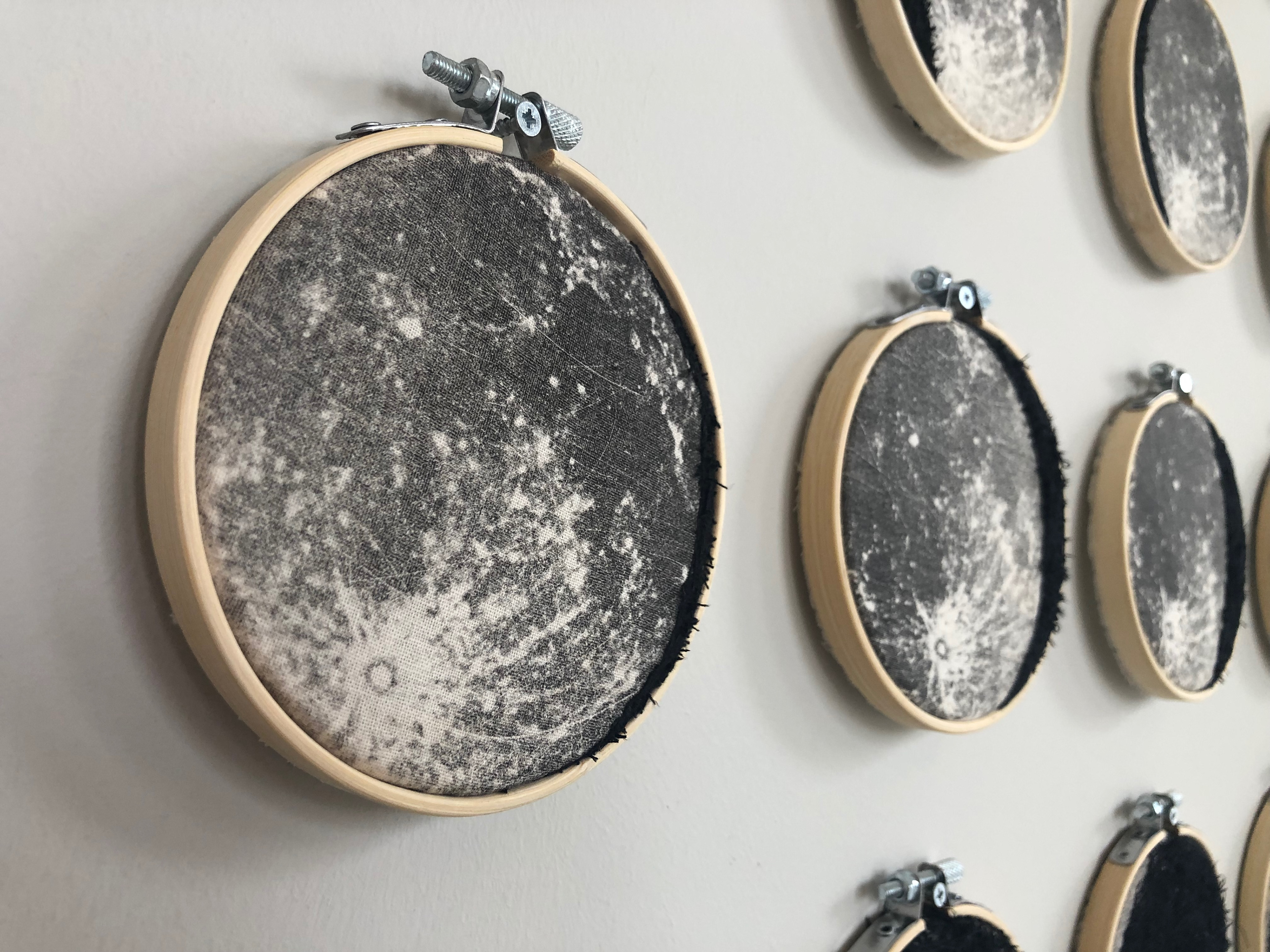
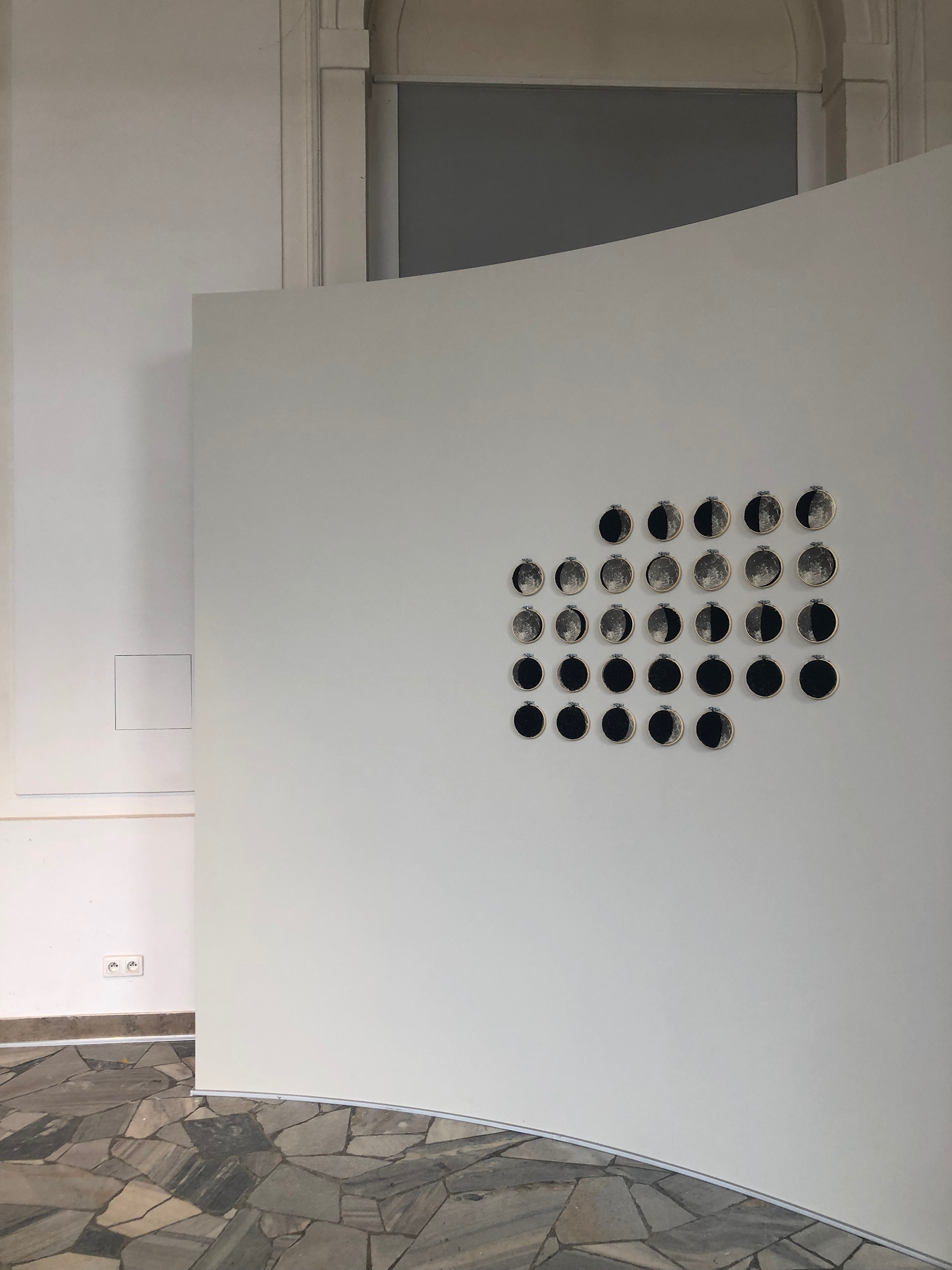
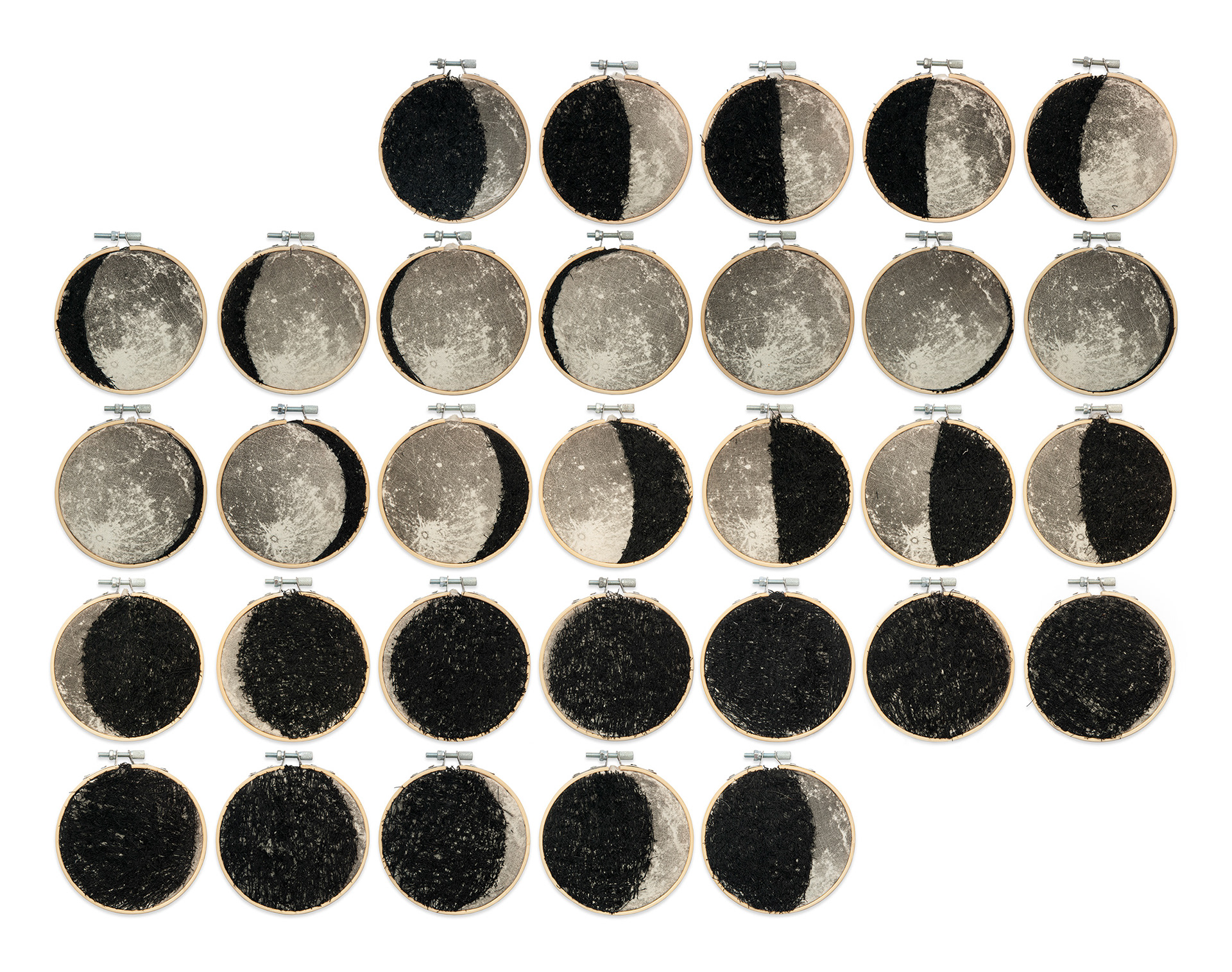
The calendar consists of 31 lithographs embroidered according to the phases of the moon. Each piece is framed in an embroidery hoop measuring 10 × 10 cm.
Life is a cycle that we have been trying to understand and organize for centuries. Observing the moon and its phases is one way of tracking the passage of time. My project tells the story of January 2020. I chose this month for two reasons: January marks both the birth and death of Jan Heweliusz, and it is also the symbolic beginning of the year. The year 2020 is further burdened by the consequences associated with the COVID-19 pandemic.
Whenever we enter a new year, we carry a sense that something different—something better—will happen; that we will finish what we left undone and begin to realize our dreams. Inevitably, we experience a quiet disappointment when it turns out that accomplishing these plans requires more than just a date in the calendar. The year 2020 showed us that the strength of entering a new year does not have to lie in ambitious plans for new achievements, but rather in recognizing what we already have. Months of isolation and separation from loved ones revealed how much we miss the small, everyday things we often fail to appreciate.
The lunar cycle is constant; it has remained unchanged for centuries, and the pattern I have created has occurred countless times over the years. Only when we realize that behind this calendar lies a specific moment in time—and, in the case of 2020, a time that, in one way or another, transformed all of our lives—do we begin to feel that nature is the only constant. Its cyclicality becomes our sole point of grounding, especially when the world seems to be collapsing around us.