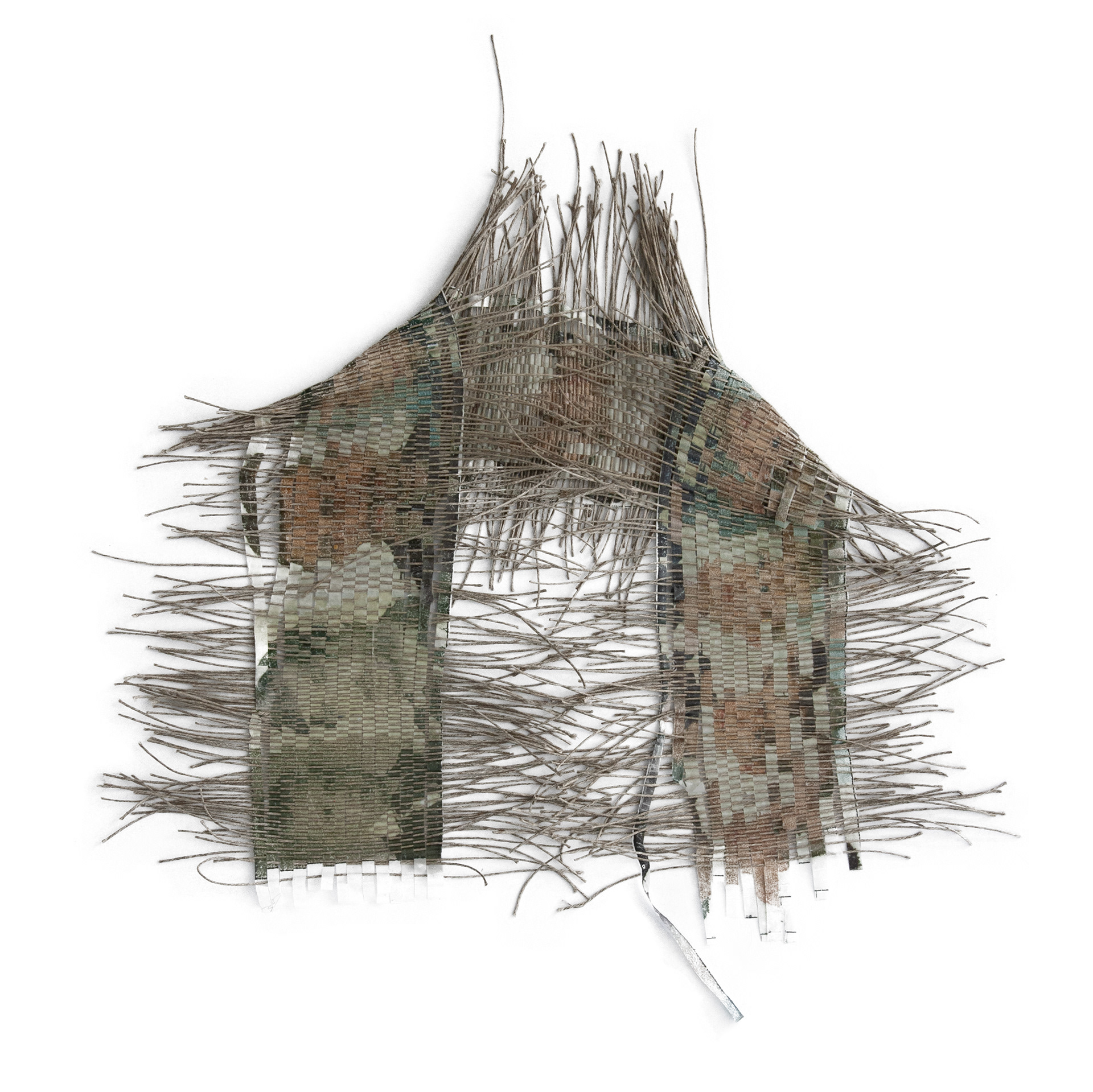
The stole
The inspiration for this work is the liturgical stole worn by a priest around the neck during Mass and other liturgical ceremonies. According to the latest census, 71.3%—or 27.1 million people in Poland—identify as Catholic. For many families, Sunday Mass has become a compulsory part of every weekend, while ceremonies such as weddings, baptisms, and First Communions are often perceived more as elements of tradition than of faith itself.
In the Roman Catholic Church, Mass is celebrated by a priest—a man. Altar servers are also boys and young men. The role of women in the Church is largely limited to cleaning, scattering flowers during processions, or, in special cases, reading passages from Scripture. There are also nuns, of course, but they do not have access to the liturgy to the same extent as men.
I grew up in a very religious household. My brothers served at the altar, and so did my father. This was a great source of pride for my mother, for whom it was a very important aspect of life.
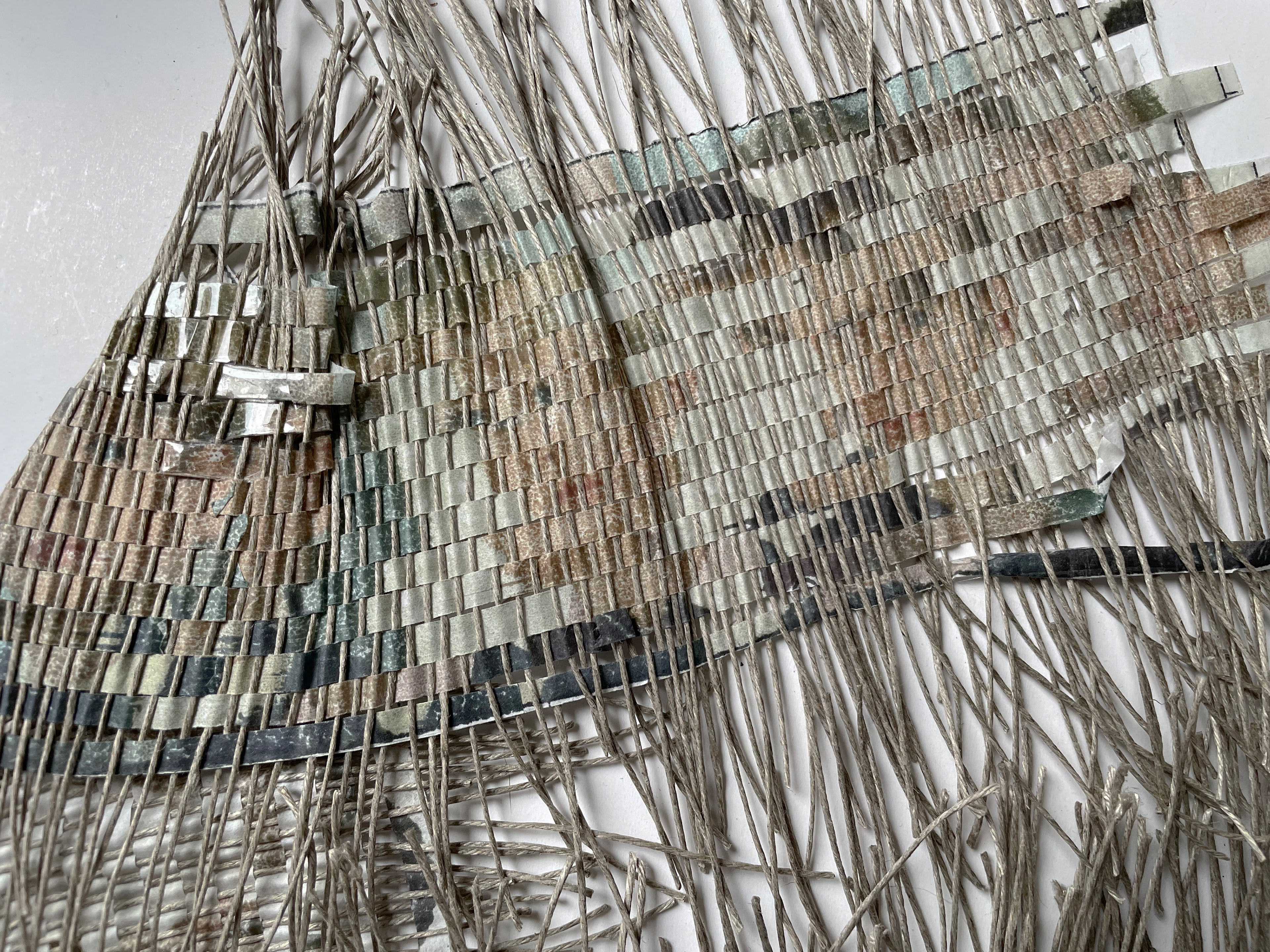
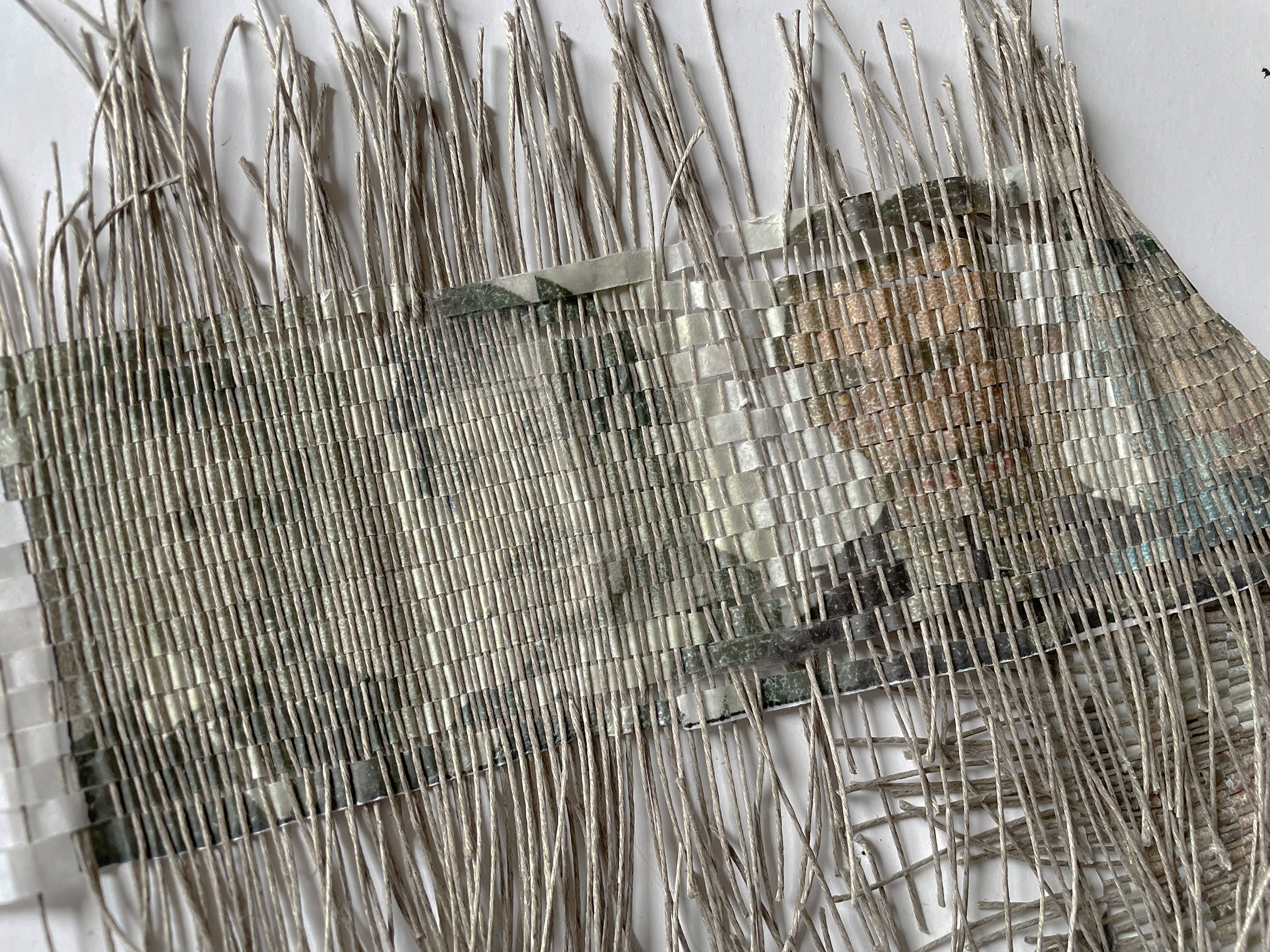
In the work, one can see male portraits—from small boys to adult men. They depict my father and brothers at different stages of life. At first, the portraits are harmoniously interwoven with linen thread, but over time they begin to undergo destruction. The faces change, become less visible, and appear damaged.
The stole I created represents a symbolic journey that we often experience in relation to religion. We begin innocently and become emotionally engaged. Step by step, however, we begin to notice imperfections and undergo a transformation, often marked by doubt and the fulfillment of others’ expectations.
Artwork information
Date of creation: 2024-03-04
Material: Linen thread and paper
Technique: Linen thread, paper, digital print on paper
Dimensions: 43 cm × 36 cm × 0.2 cm
Material: Linen thread and paper
Technique: Linen thread, paper, digital print on paper
Dimensions: 43 cm × 36 cm × 0.2 cm
Stuła Inspiracją do mojej pracy jest szarfa zakładana na szyję przez kapłana do mszy i wszelkich czynności liturgicznych. Według najnowszego spisu powszechnego 71,3 proc., czyli 27,1 mln osób w Polsce wyznaje katolicyzm. Coniedzielna msza dla wielu rodzin stała się obowiązkowym elementem każdego weekendu, a uroczystości takie jak ślub, chrzest, komunia można traktują bardziej jako element tradycji niż wyznania. Msze w kościele katolickim odprawia ksiądz – mężczyzna. Do mszy służą ministranci – czyli młodzi chłopcy. Rola kobiet w kościele ogranicza się do sprzątania, sypania kwiatów na procesjach lub w szczególnych sytuacjach czytania fragmentów Pisma Świętego. Są oczywiście też zakonnice, ale one nie mają dostępu do liturgii w takim stopniu jak mężczyźni. Wychowywałam się w bardzo religijnym domu. Moi braci służyli do mszy, mój tata także. Było to powodem wielkiej dumy mojej mamy, dla której był to bardzo ważny element życia. Na pracy można dostrzec męskie portrety: od małych chłopców po dorosłych mężczyzn. Przedstawiają one kolejno mojego tatę i braci, od najmłodszych lat do dorosłości. Na początku portrety harmonijnie przeplatają się z lnianą nicią, ale z czasem zaczynają ulegać destrukcji. Twarze się zmieniają, przestają być dobrze widoczne, wyglądają jak uszkodzone. Stuła którą stworzyłam przedstawia symboliczną drogę, którą przechodzimy bardzo często w spotkaniu z religią. Zaczynamy niewinnie i angażujemy się emocjonalnie. Krok po kroku odkrywamy jednak niedoskonałości i zaczynamy przechodzić przemianę, często pełną zwątpień i zaspokajania cudzych ambicji.
Informacje o dziele
Data powstania:
2024-03-04
Materiał:
Lniana nić i papier
Technika:
Lniana nić, papier, druk cyfrowy na papierze
Długość:
43 cm
Szerokość:
36 cm
Głębokość:
0.2 cm