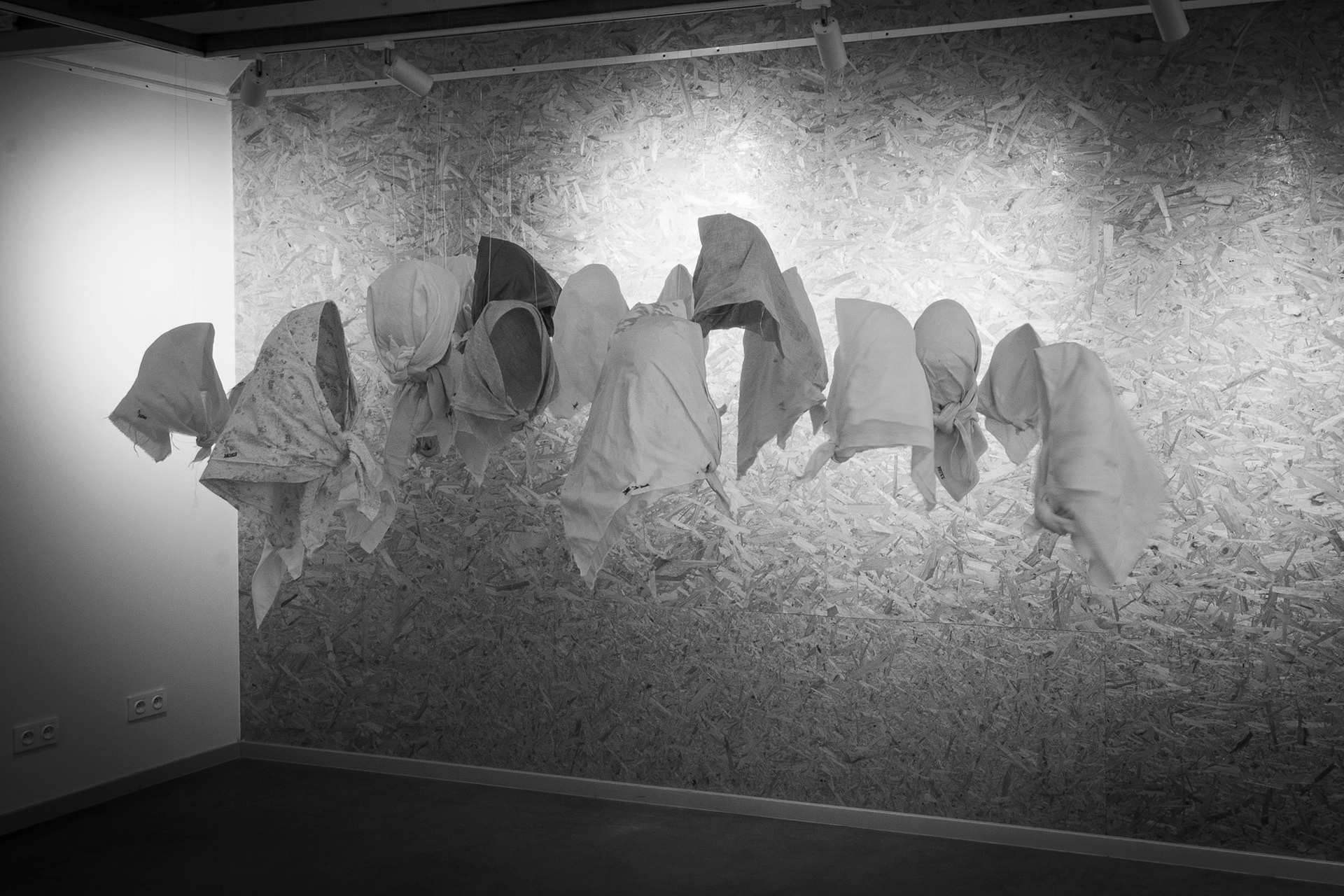
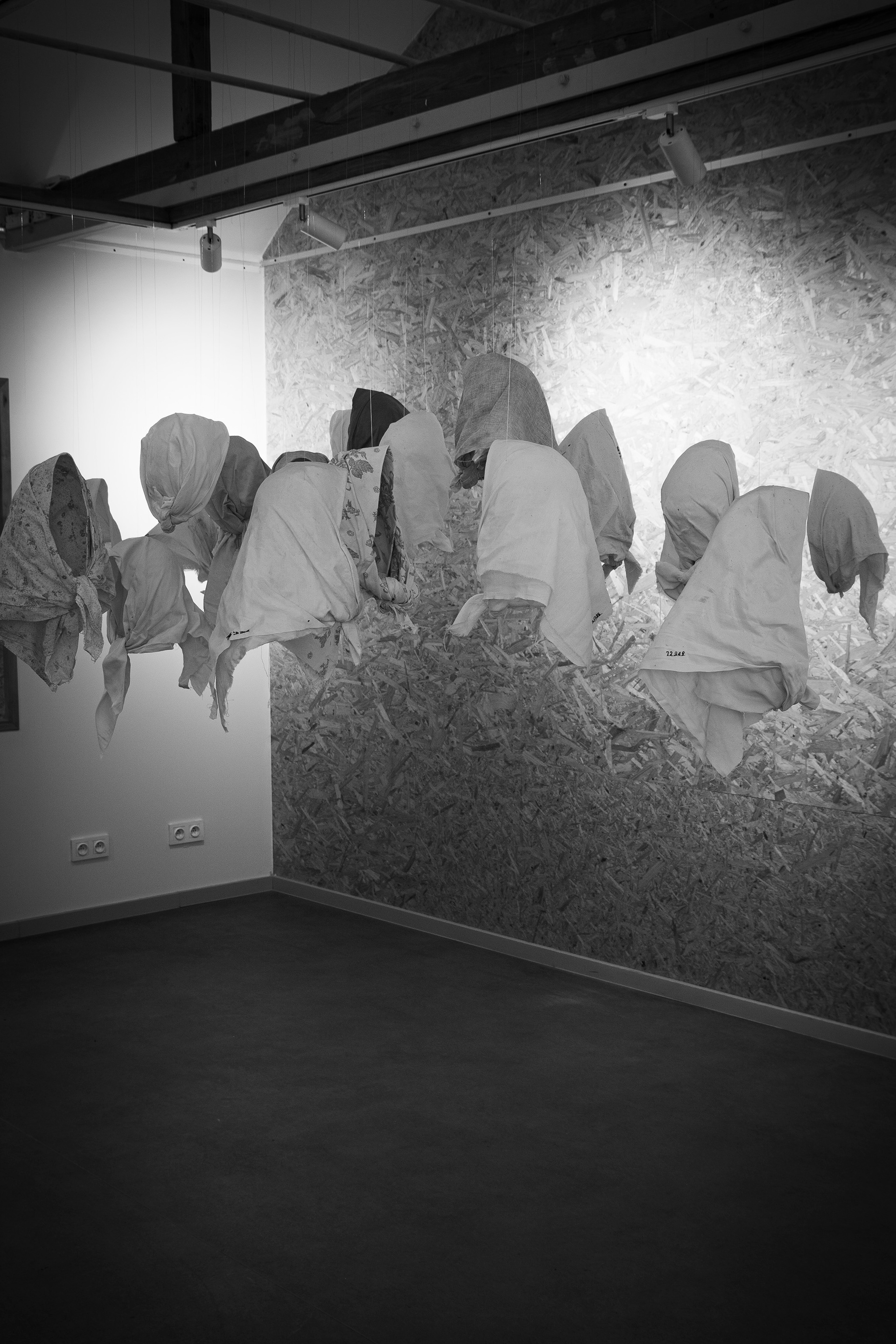
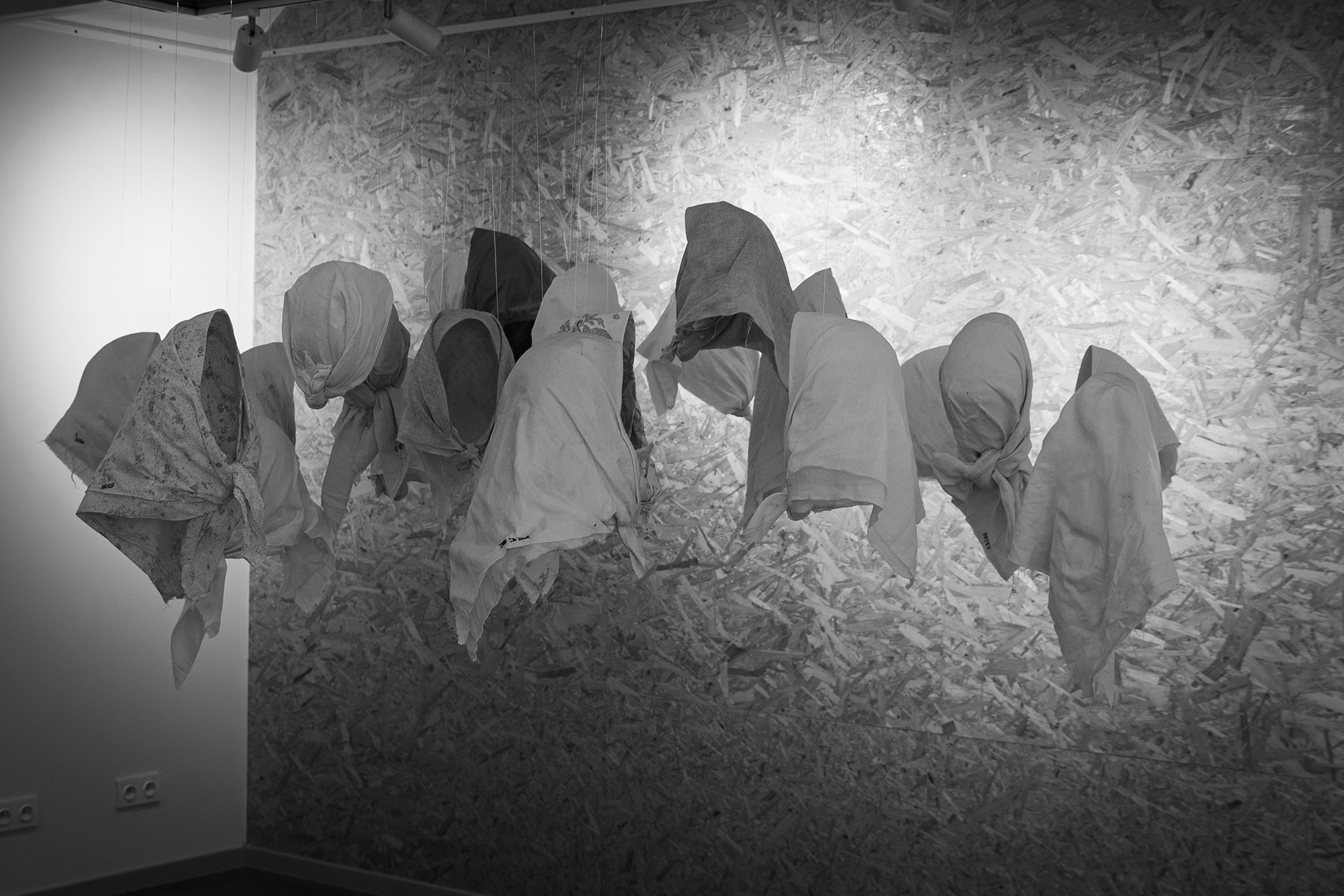
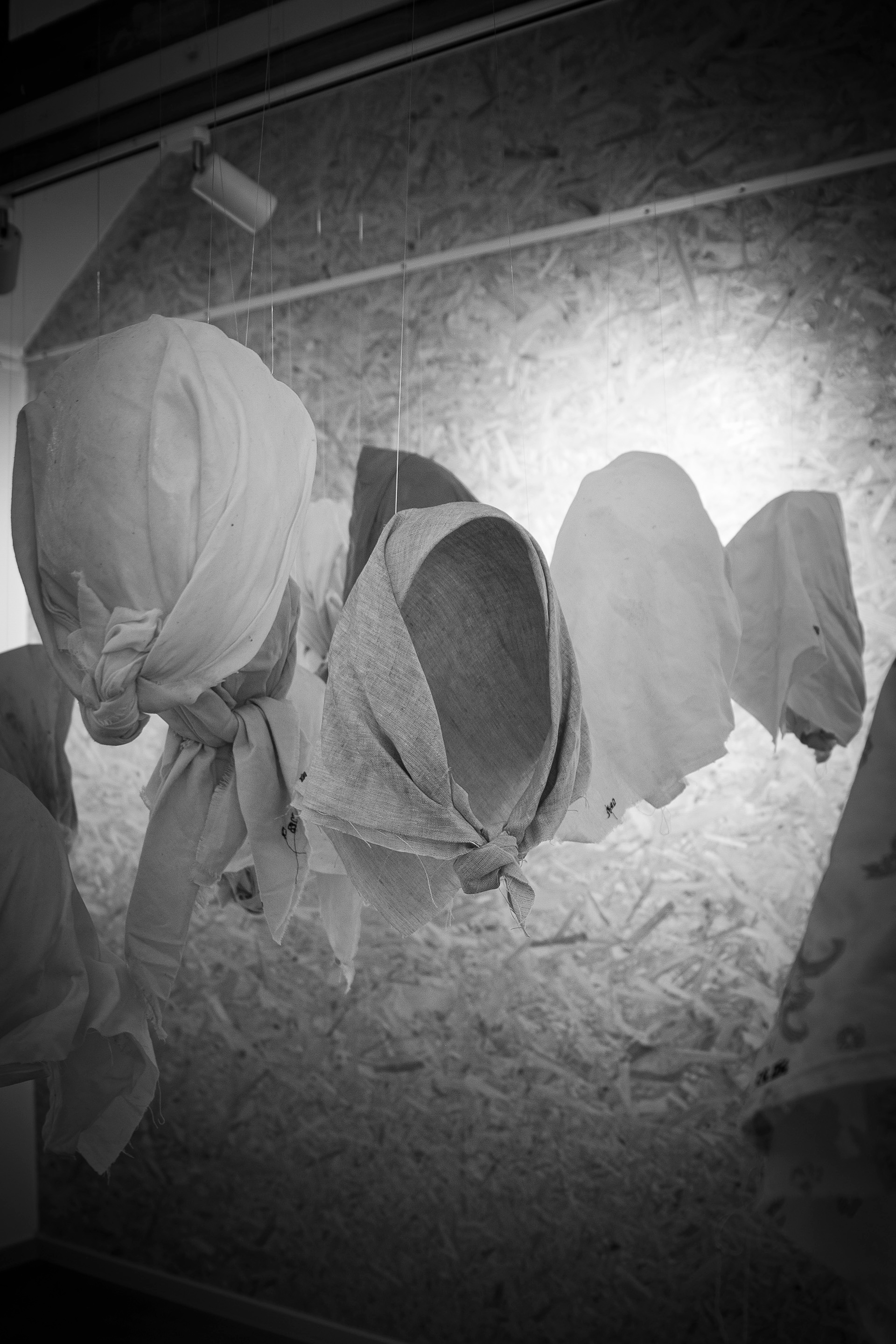
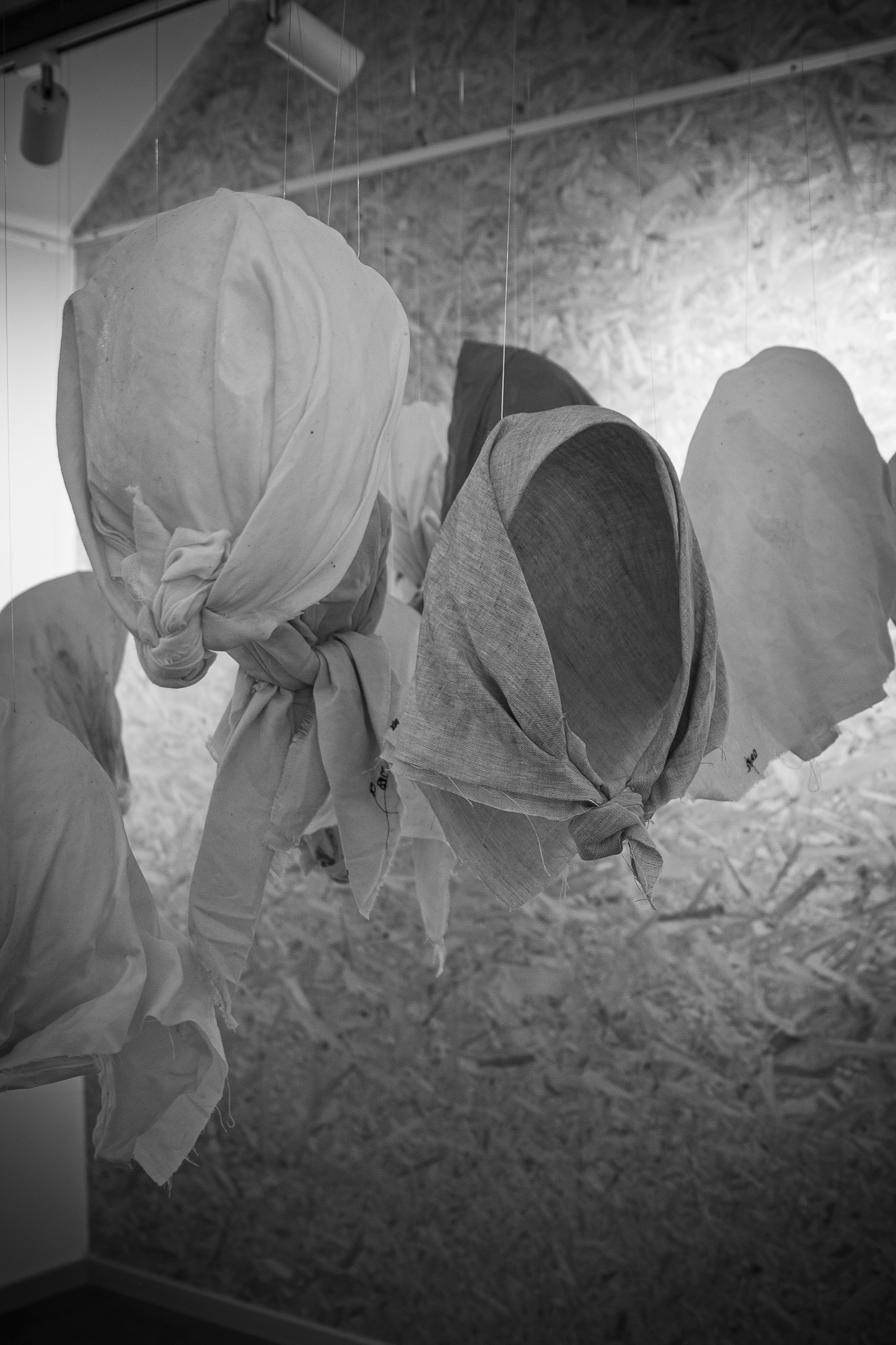
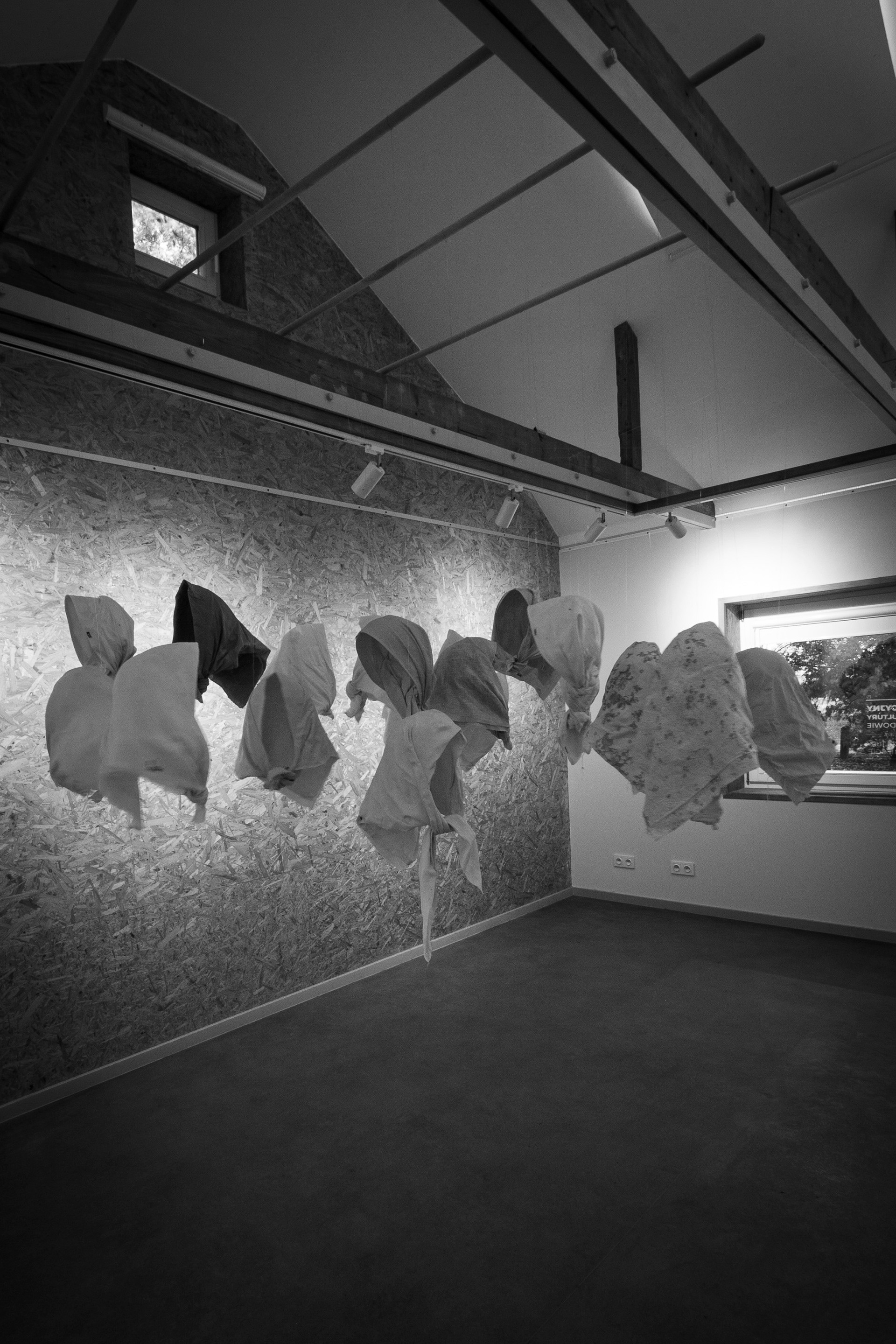
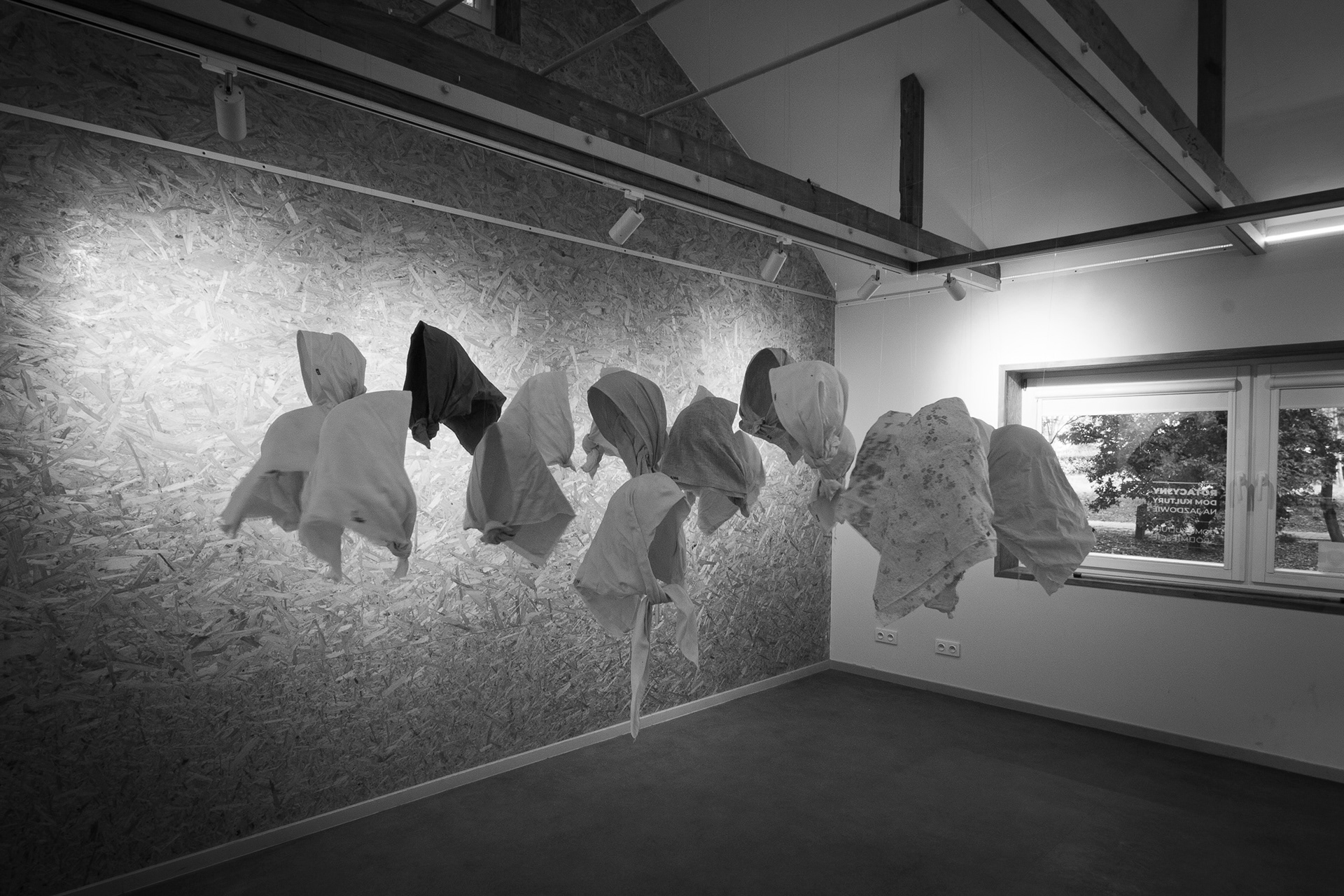
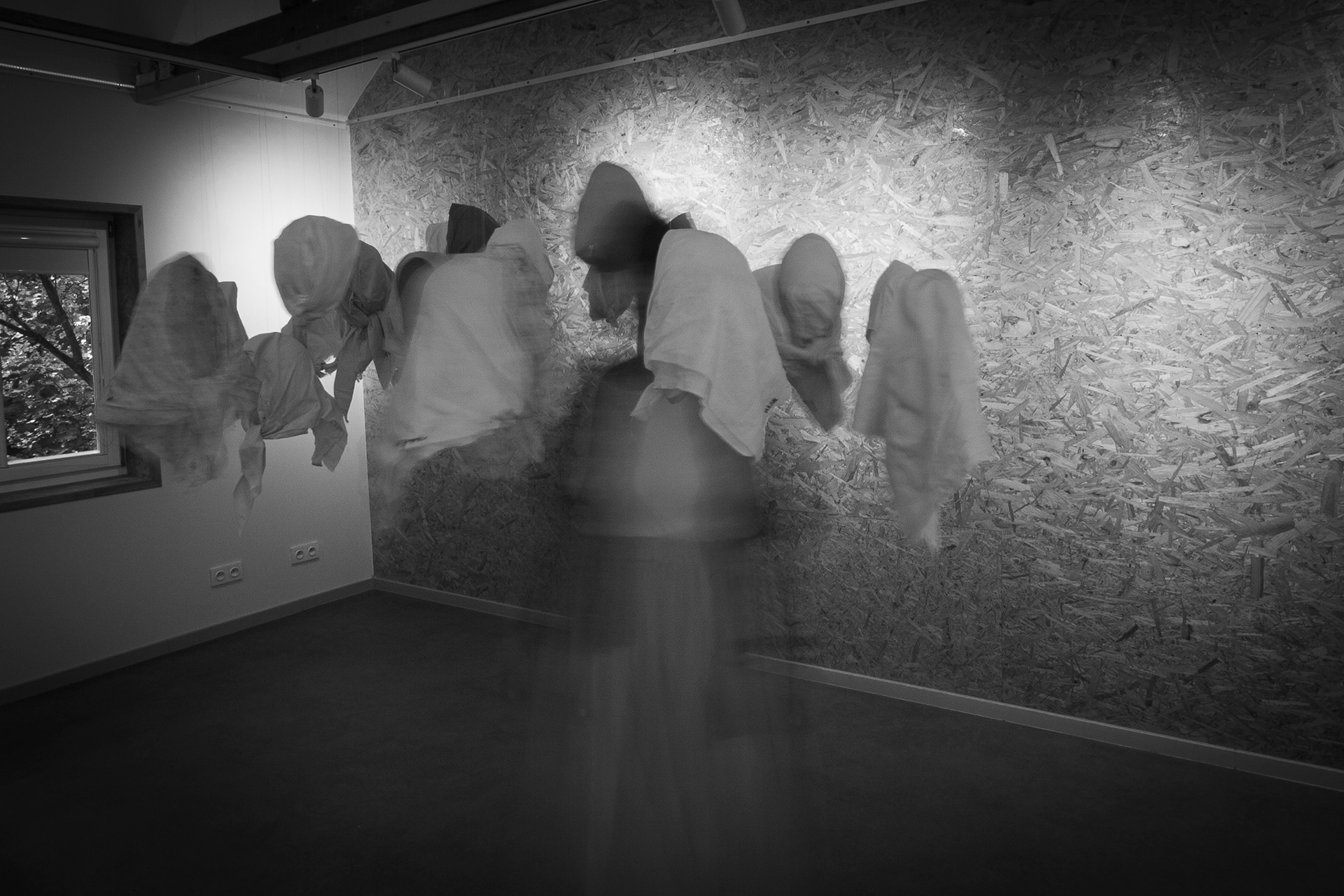
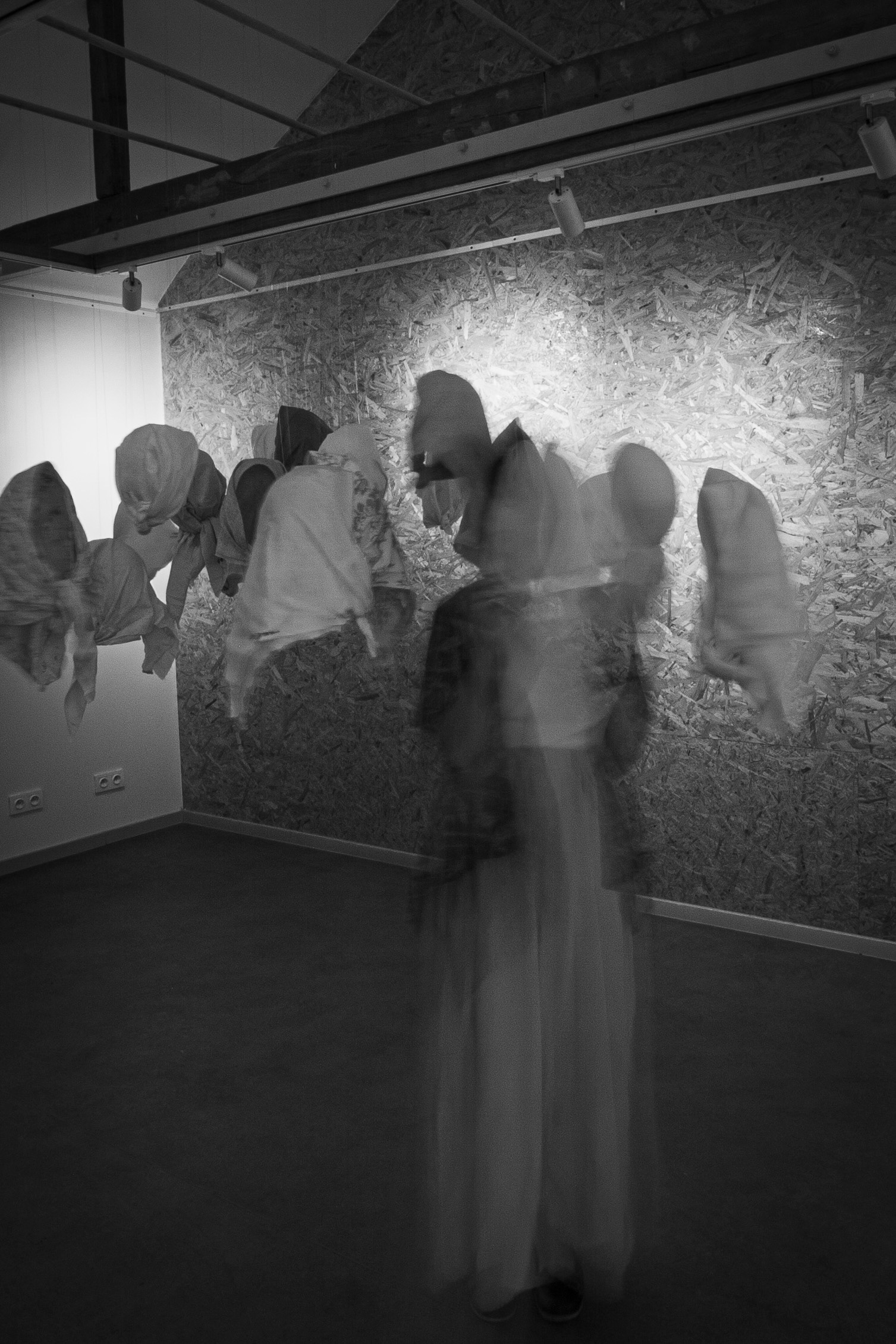
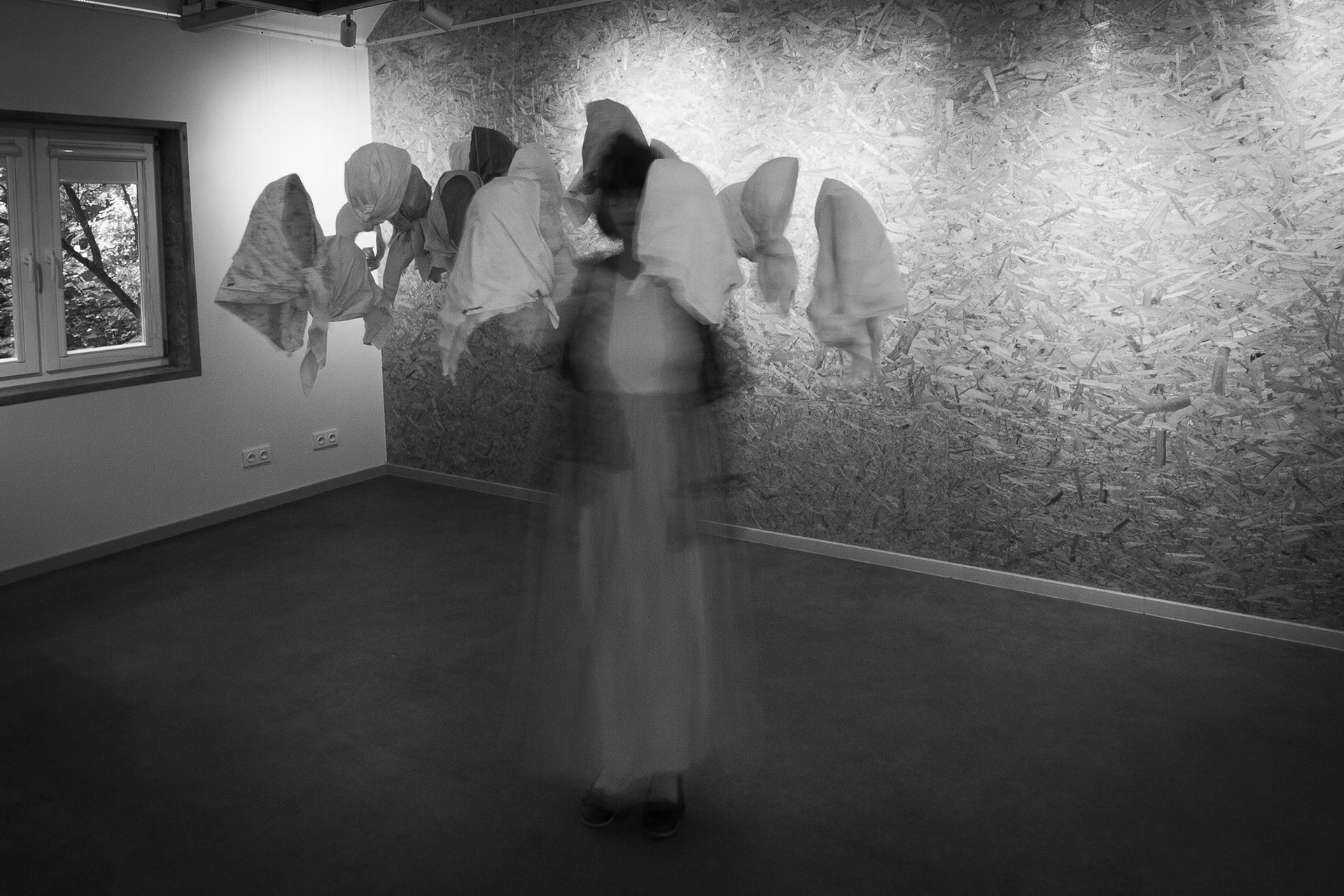
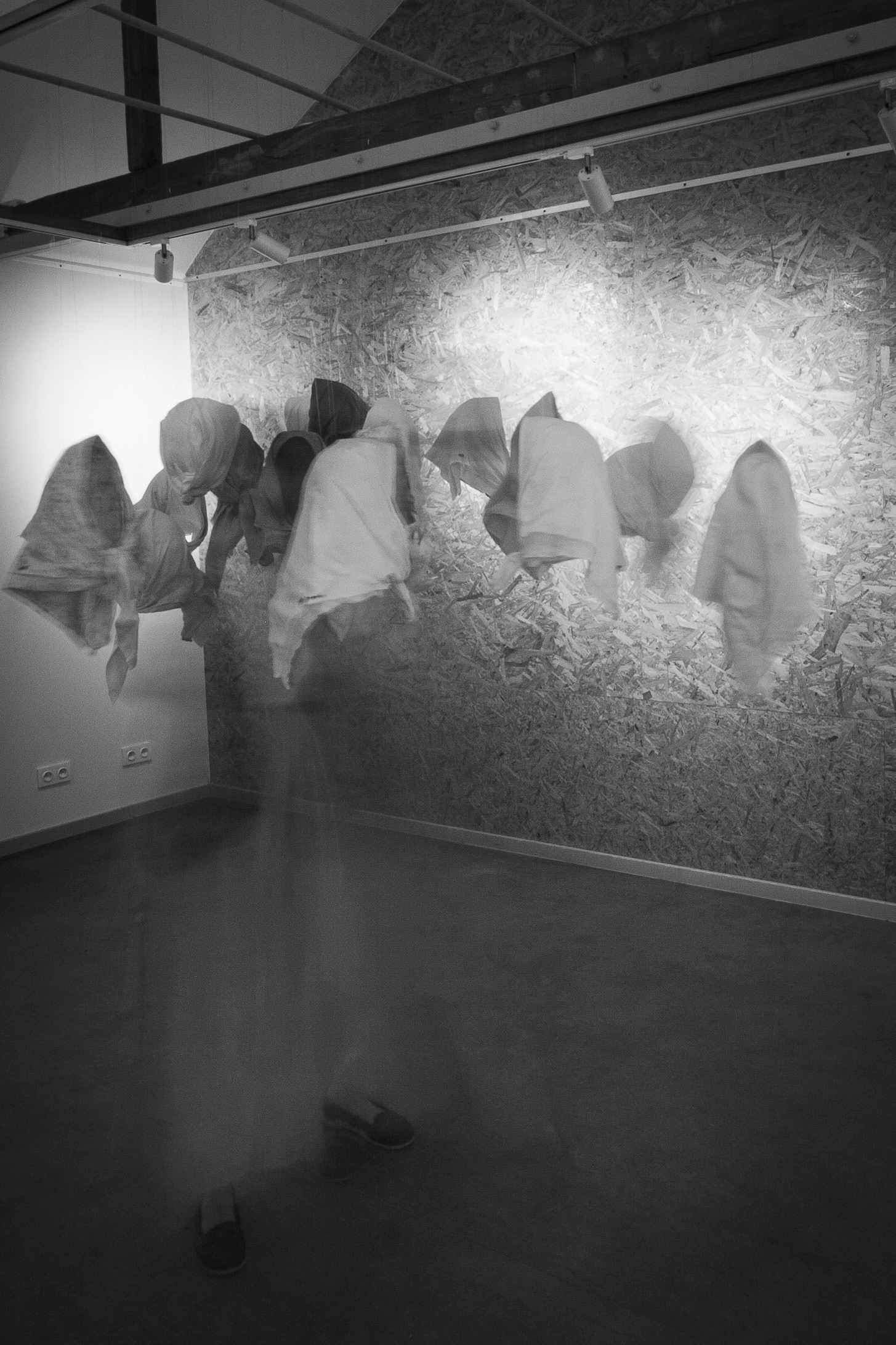
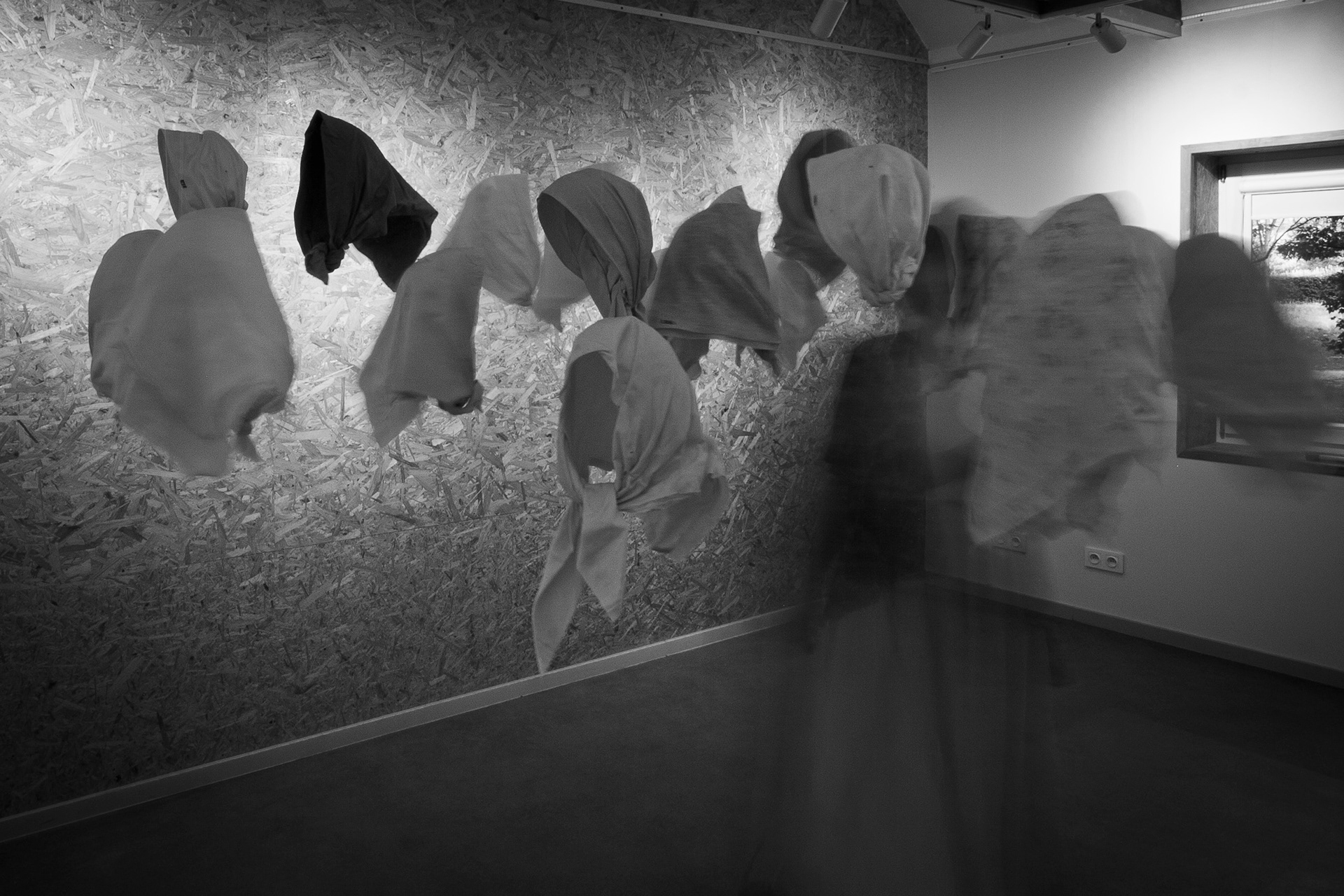
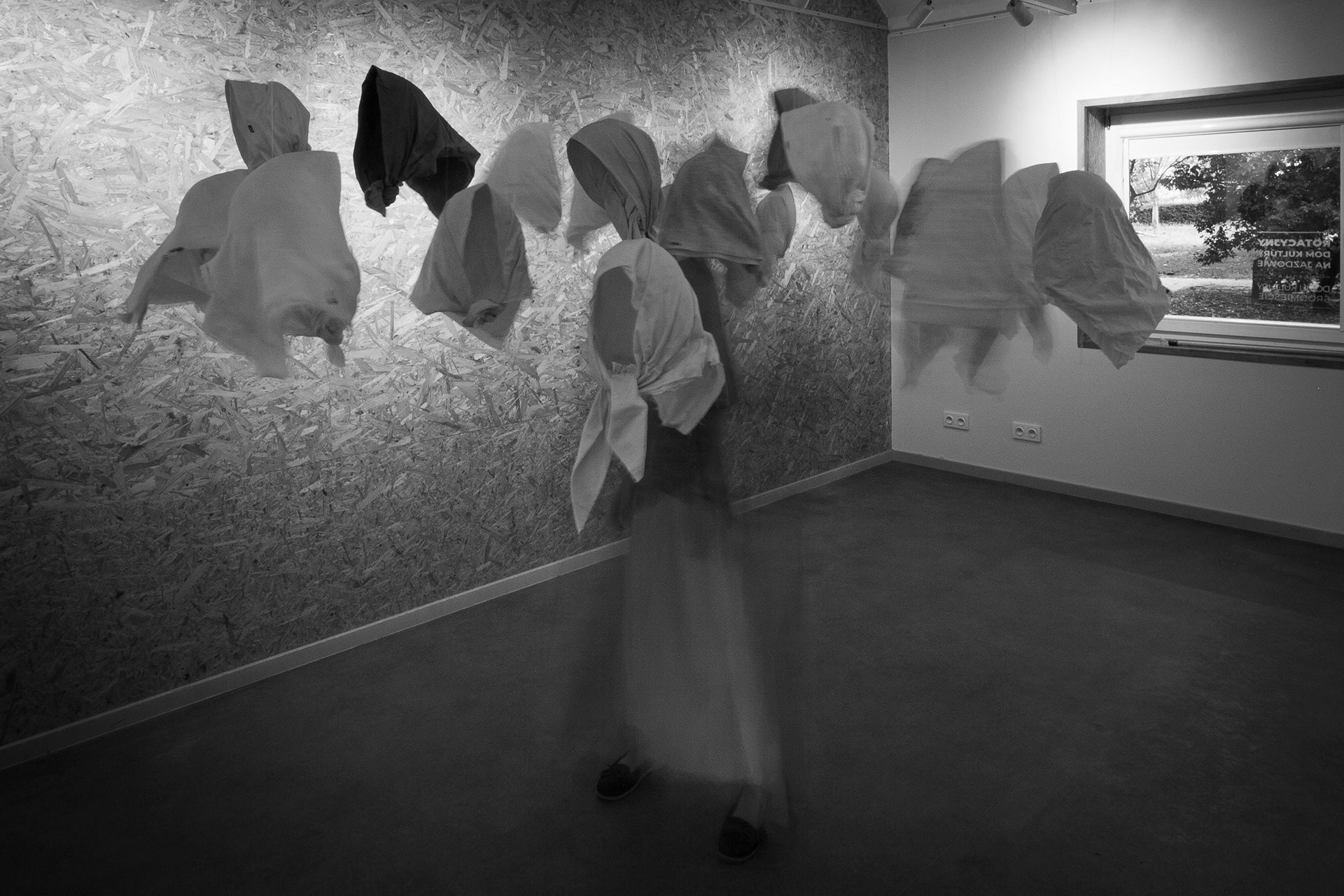
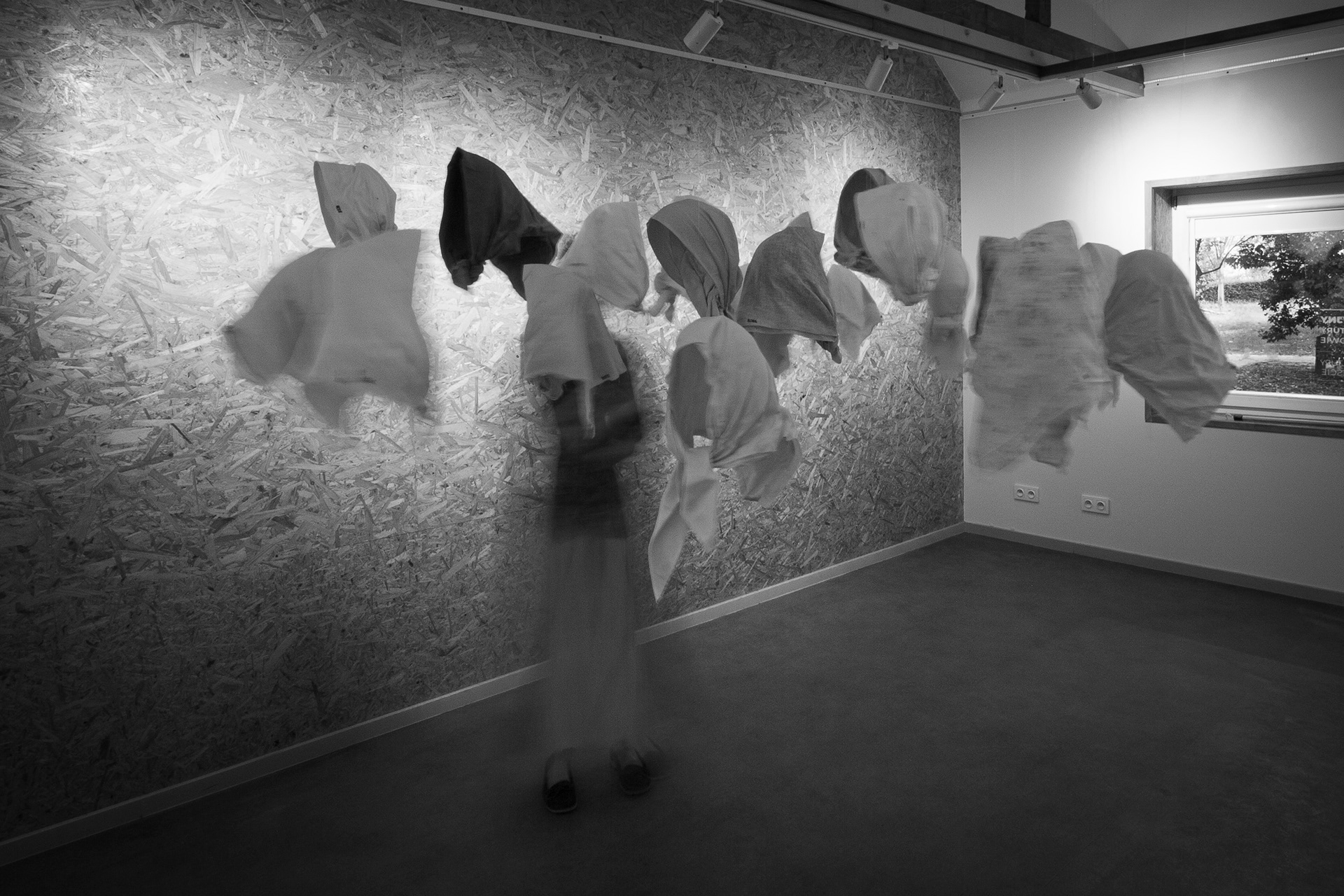
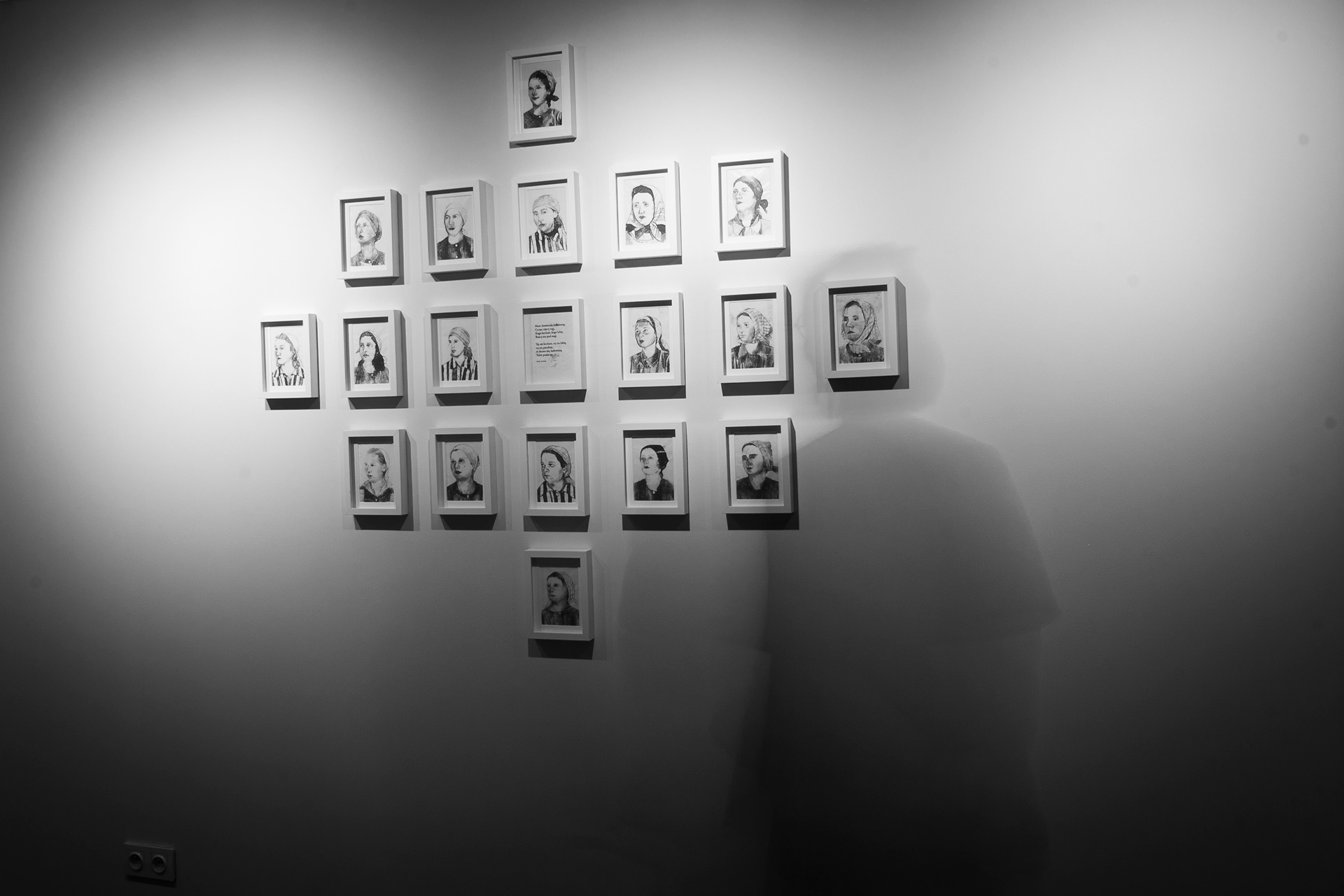
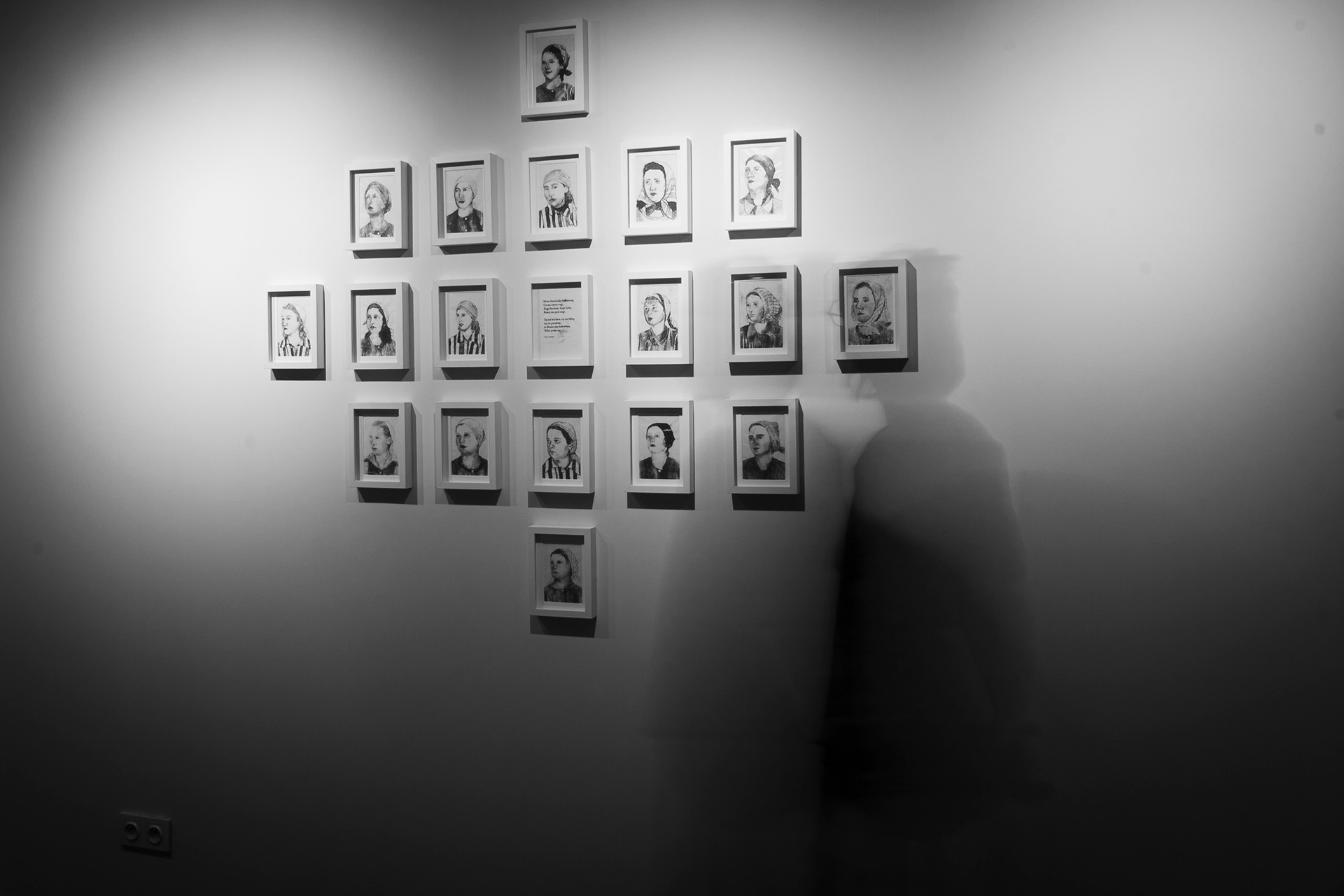
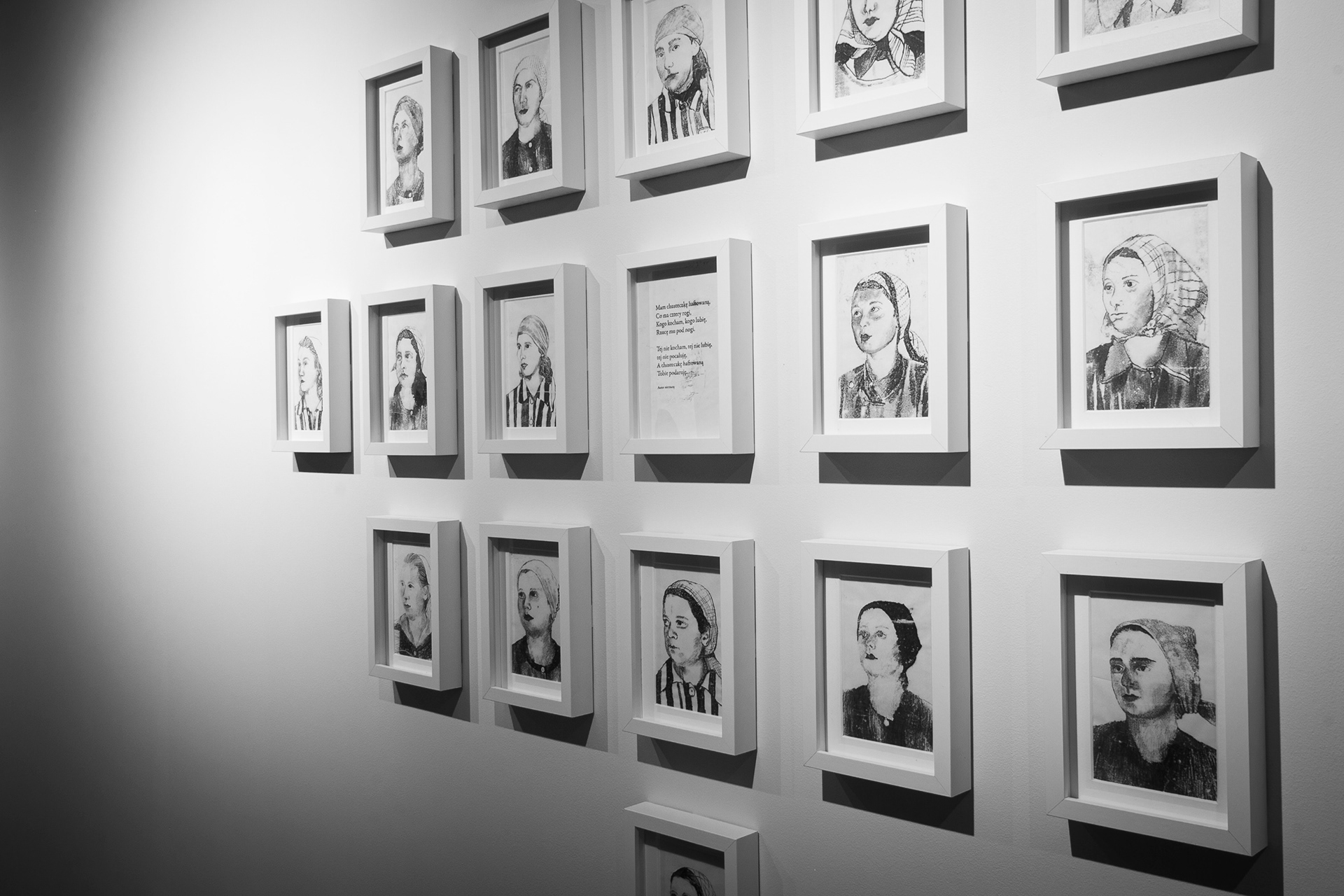
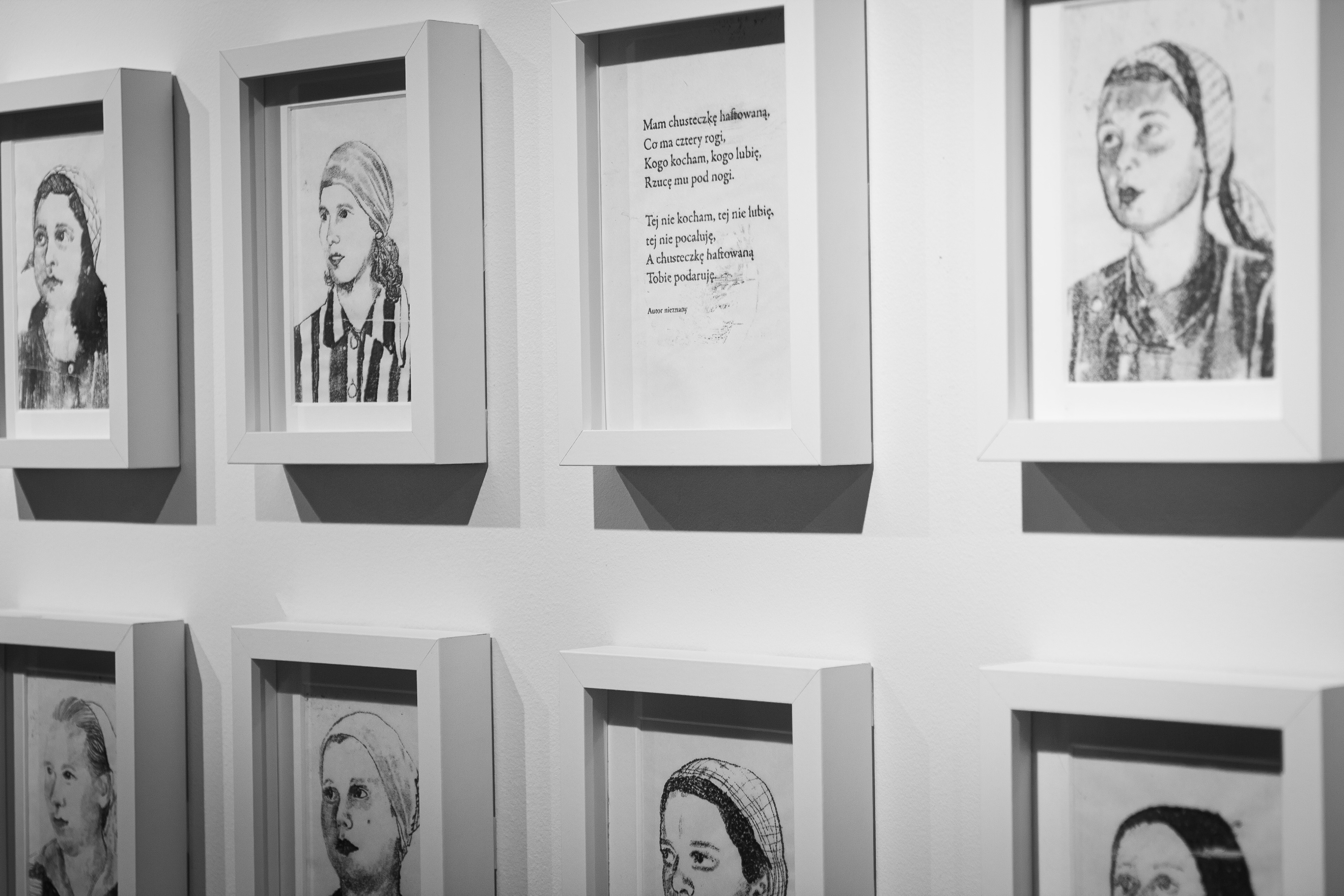
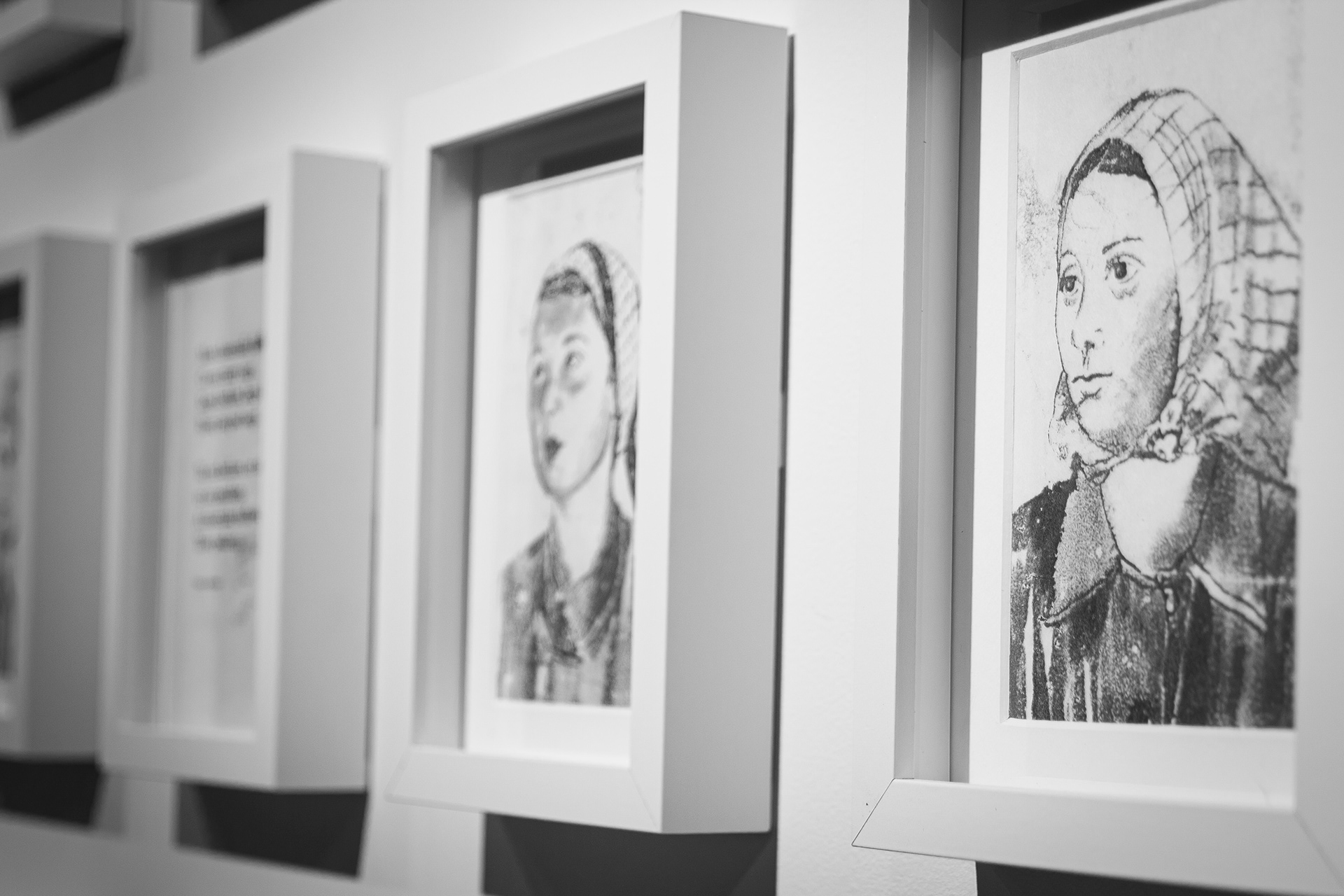
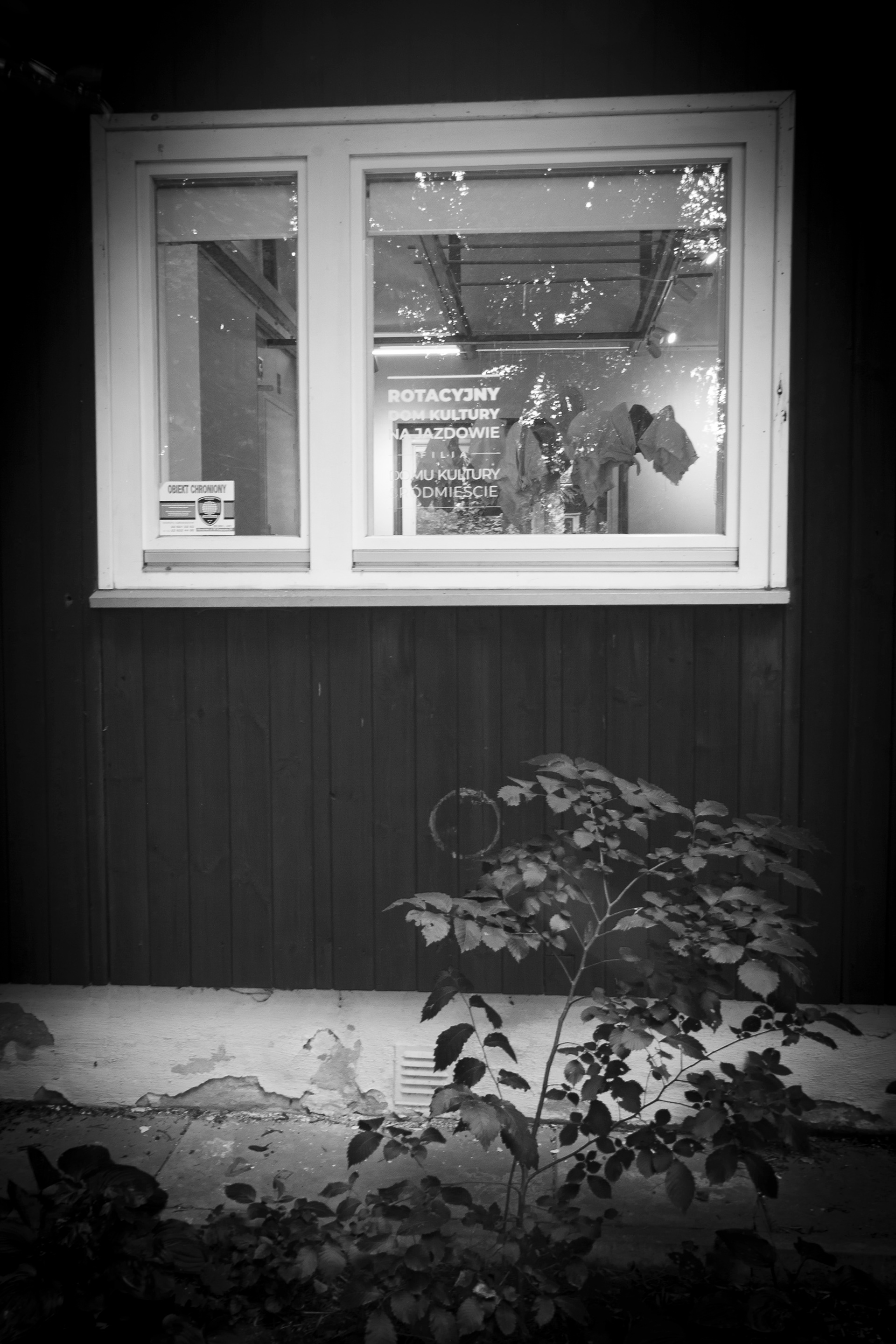
The exhibition “Mam chusteczkę haftowaną” (“I Have an Embroidered Handkerchief”) is a story about women—female prisoners—for whom a headscarf often remained the only element of individual clothing. I wish to tell their story through this particular piece of headwear, while also drawing attention to the anonymity of the crowd.
Reality confronts us in a peculiar moment in which a headscarf can be a decorative accessory, an ordinary covering, or a symbol of coercion imposed by religion or tradition. At times, it is a fashion whim, an expression of individuality; yet often it is an emblem of the requirement to cover hair—the symbol of femininity. In the camps, this symbol was transferred from the hair to the headscarf, which, tied in a simple or more elaborate way, signaled to the world a sense of personal dignity and self-worth.
In my work, I have removed the human figure. We see only head coverings—forms that once served as a manifestation of the self, because being human—being a woman—was not enough. I speak about these women without showing faces or bodies, using a structure made of headscarves. At first glance, it forms an anonymous mass that requires attentive viewing in order to notice the details assigned to individual subjects—women.
Those I speak of are no longer here. What remains are photographs and fragments of clothing preserved in museums. To me, they are silent heroines who, in their struggle for themselves, were able to survive each successive day in the camp.
Wystawa „Mam chusteczkę haftowaną” to opowieść o kobietach – więźniarkach, dla których chustka na głowie pozostawała często jedynym akcentem indywidualnego ubioru. Pragnę opowiedzieć o nich na podstawie tego szczególnego nakrycia głowy, zwracając jednocześnie uwagę na anonimowość tłumu.
Rzeczywistość zastaje nas w osobliwym momencie, w którym chustka na głowie bywa ozdobą, zwykłym nakryciem głowy lub symbolem przymusu narzuconego przez religię albo tradycję. Czasem jest modową fanaberią, akcentem indywidualności, często jednak emanacją nakazu zakrycia przed światem włosów – symbolu kobiecości. W obozach dokonało się przeniesienie tego symbolu z włosów na chustkę, która zawiązana zwyczajnie lub w bardziej wyszukany sposób sygnalizowała światu poczucie własnej wartości.
W swojej pracy zrezygnowałam z postaci. Oglądamy tylko nakrycia głowy. Nakrycia, które były manifestacją siebie, bo bycie człowiekiem – bycie kobietą, nie wystarczało. Opowiadam o tych kobietach nie pokazując ani twarzy, ani ciał, za pomocą konstrukcji z chustek. Na pierwszy rzut oka stanowi ona anonimową masę, która wymaga uwagi w odbiorze, by dostrzec szczegóły przypisane konkretnym podmiotom – kobietom. Tych, o których opowiadam już nie ma. Pozostały po nich zdjęcia, fragmenty ubioru w muzeach. Dla mnie są cichymi bohaterkami, które walcząc o siebie, były w stanie przetrwać każdy kolejny dzień w obozie.